
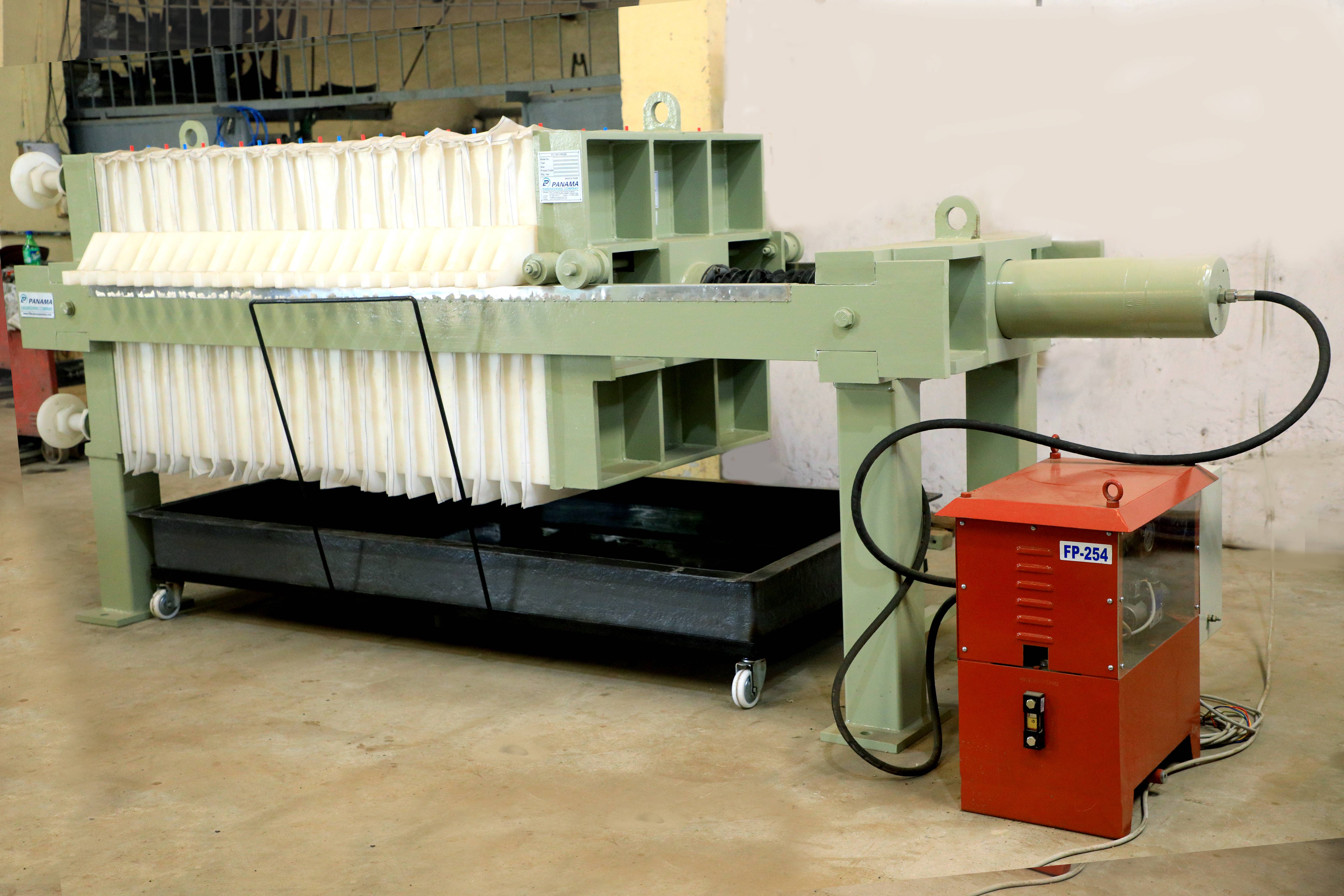
What Are Membrane Plates? Working Principle, Benefits, Applications & Selection Guide
Membrane plates are specialized filter press plates designed to provide an additional squeezing stage after the initial filtration process. They are commonly used in a membrane filter press when an industrial process requires improved dewatering, reduced filter cake moisture, better cake consistency, or more efficient solid-liquid separation.
Unlike conventional recessed chamber plates, membrane plates incorporate a flexible or movable membrane surface. After the filter chamber has been filled and the initial filter cake has formed, the membrane can be pressurized using a suitable medium. This causes the membrane to expand toward the cake and mechanically squeeze it, forcing additional liquid through the filter cloth.
This additional squeezing action is one of the main reasons membrane plate technology is used in demanding filtration applications such as wastewater treatment, chemicals, mining, minerals, ceramics, pigments, dyes, pharmaceuticals, food processing, and industrial sludge dewatering.
In this guide, we explain what membrane plates are, how membrane plates work, their advantages, applications, components, and the difference between membrane plates and standard chamber filter plates.
What Are Membrane Plates?
A membrane plate is a filter press plate designed with a flexible squeezing surface that applies additional pressure to the filter cake after the initial filtration stage.
Membrane plates are installed inside a membrane filter press and operate together with filter cloth and other filtration components.
During conventional pressure filtration, slurry is pumped into the chambers between the plates. Liquid passes through the filter cloth while suspended solids remain inside the chamber.
As filtration continues, the solids accumulate and form a filter cake.
In a membrane filter press, filtration does not necessarily end when the chamber has filled. The membrane can then be expanded to compress the filter cake.
This additional mechanical compression can remove more liquid from the cake than feed pressure alone, depending on the material and operating conditions.
The result can be a drier and more consistent filter cake.
If you are evaluating membrane plates for an existing or new filtration system, you can contact Panama Engineering for membrane filter press solutions based on your process requirements.
How Do Membrane Plates Work?
Understanding the membrane plate working principle is easier when the complete filtration cycle is divided into several stages.
Stage 1: Closing the Filter Press
Before filtration begins, the filter plate pack is compressed and securely closed.
In many industrial filter presses, a hydraulic closing system is used to apply the required closing force.
The membrane plates, chamber plates where applicable, and filter cloths are positioned together to create sealed filtration chambers.
Stage 2: Slurry Feeding
A feed pump transfers the slurry into the filter press.
The slurry may consist of water or another liquid containing suspended solids such as minerals, chemicals, ceramic particles, pigments, industrial sludge, or other process materials.
As the slurry enters the chambers, pressure begins to increase.
Stage 3: Primary Filtration
The initial filtration stage operates similarly to a conventional chamber filter press.
Liquid passes through the filter cloth and drainage channels while solid particles are retained inside the chambers.
The separated liquid exits the system as filtrate.
Meanwhile, the retained solids gradually accumulate inside each chamber.
Stage 4: Filter Cake Formation
As additional slurry enters the chambers, the solid layer becomes progressively thicker.
Eventually, the chambers contain a formed filter cake.
In a standard chamber filter press, this may represent the main dewatering stage.
With membrane plates, however, an additional squeezing process can follow.
Stage 5: Membrane Squeezing
After the initial cake has formed, the membrane is pressurized using the system's designed squeezing medium and operating procedure.
The flexible membrane surface expands toward the filter cake.
This movement applies mechanical pressure across the cake, forcing additional liquid out.
The released liquid passes through the filter cloth and exits through the filtrate channels.
Stage 6: Pressure Release
Once the membrane squeezing stage is complete, pressure is safely released according to the equipment's operating sequence.
The membranes return to their normal position.
Stage 7: Cake Discharge
The filter press can then be opened.
The plates are separated and the dewatered cakes are discharged.
The equipment is subsequently prepared for the next filtration cycle.
Membrane Plates vs. Chamber Filter Plates
One of the most common questions is: What is the difference between membrane plates and chamber plates?
Both are used for pressure filtration, but their method of dewatering differs.
Chamber Filter Plates
Recessed chamber plates have fixed filtration surfaces.
When two recessed plates are positioned together, they create a chamber where filter cake forms.
Dewatering is primarily achieved through the pressure generated while slurry is pumped into the filter press.
Once the chambers fill and filtration reaches the required endpoint, the cycle can be completed.
Membrane Filter Plates
Membrane plates introduce an additional mechanical squeezing stage.
After the initial cake forms, the flexible membrane expands and compresses the cake.
This additional compression can remove more residual liquid.
Therefore, membrane plates may be preferred when lower cake moisture or additional dewatering is important to the process.
Main Components of a Membrane Plate
Although the exact construction depends on the manufacturer and application, membrane plate assemblies generally include several important features.
Plate Body
The plate body provides structural support and forms part of the filtration chamber.
It must withstand the mechanical forces associated with filtration and membrane squeezing.
Flexible Membrane
The membrane is the component responsible for the squeezing action.
When pressure is applied according to the equipment design, the membrane moves toward the filter cake.
Filter Cloth
Filter cloth covers the filtration surface and separates solid particles from liquid.
Choosing the correct cloth is essential for achieving appropriate filtration speed, filtrate clarity, cake formation, and cake release.
Filtrate Drainage Channels
Drainage channels allow filtered liquid to move away from the cake and exit the filter press.
Efficient drainage is important during both the primary filtration and membrane squeezing stages.
Types of Membrane Plates
Membrane plates can be manufactured in different configurations depending on the process and equipment design.
Fixed Membrane Plates
In some designs, the membrane and plate body form an integrated structure.
This type of construction can provide a straightforward solution for certain filtration processes.
Replaceable Membrane Plates
Other designs incorporate replaceable membrane elements.
A replaceable membrane can potentially simplify maintenance because the membrane component may be replaced without replacing the complete plate, depending on the plate design and condition.
Membrane and Chamber Plate Arrangement
Some membrane filter presses use a combination of membrane plates and companion chamber plates.
The exact arrangement should be selected according to the filtration process, cake requirements, operating pressure, and equipment design.
Advantages of Membrane Plates
The additional squeezing capability can provide several potential advantages compared with standard filtration alone.
1. Reduced Filter Cake Moisture
One of the primary benefits of membrane plates is their ability to apply additional mechanical pressure to the filter cake.
This can remove additional liquid and reduce residual cake moisture.
The actual improvement depends on the characteristics of the slurry and process conditions.
2. More Consistent Filter Cake
Membrane squeezing can apply pressure across the formed cake, potentially improving cake consistency.
This can make subsequent cake handling more predictable.
3. Potentially Shorter Filtration Cycles
In suitable applications, membrane technology can help achieve the required dewatering target more efficiently than relying solely on extended feed filtration.
Actual cycle-time improvement depends on the slurry and equipment configuration.
4. Improved Liquid Recovery
Additional cake squeezing can recover more liquid from the solid material.
For industries where the liquid phase is valuable or can be reused after appropriate treatment, this may provide an important process benefit.
5. Reduced Sludge Weight and Volume
Removing more water from sludge can reduce the weight of material requiring downstream handling.
Depending on the application, this may help reduce transportation, storage, treatment, or disposal requirements.
6. Better Cake Handling
A cake with lower moisture content can often be easier to handle than wet, sticky sludge.
Improved cake consistency may simplify discharge, transportation, or subsequent processing.
To determine whether these advantages are achievable with your specific slurry, you can discuss your membrane plate requirements with Panama Engineering.
Applications of Membrane Plates
Because membrane plates provide additional dewatering, they can be used across numerous industries.
Wastewater Treatment
Membrane filter presses can be used for industrial sludge dewatering where reducing cake moisture is an important objective.
Wastewater treatment processes often generate sludge containing a substantial amount of water.
A membrane squeezing stage can help remove additional water from the formed cake.
Applications can include industrial wastewater treatment plants and effluent treatment systems.
Chemical Industry
Chemical manufacturing processes often require solid-liquid separation for product recovery, waste treatment, or intermediate processing.
Membrane plates can be considered when chemical slurries require enhanced dewatering.
Material compatibility is especially important in chemical applications.
Plate material, membrane material, filter cloth, seals, piping, and other wetted components should be selected according to the chemical characteristics of the slurry.
Mining and Mineral Processing
Mining operations often process large volumes of mineral slurry.
Membrane filter presses can be used for mineral concentrate or tailings dewatering where reducing residual moisture is valuable.
Additional water recovery may also be beneficial in facilities seeking to reuse process water.
Ceramic Industry
Ceramic manufacturing frequently involves clay or ceramic slurries that need to be dewatered before further processing.
Membrane plates can provide additional cake compression and help manufacturers achieve the required material consistency.
Potential applications include ceramic tiles, sanitaryware, tableware, porcelain, and technical ceramics.
Marble and Stone Processing
Marble, granite, and stone-cutting operations generate wastewater containing fine mineral particles.
After these particles are concentrated into sludge, a membrane filter press can help separate water from the solids.
A lower-moisture cake may be easier to handle and transport.
Pigments and Dyes
Pigment and dye production can involve fine particles that require separation from processing liquids.
Membrane filtration can be used where additional dewatering or product recovery is required.
Filter cloth selection is particularly important because fine particles can influence filtration speed and filtrate clarity.
Food Processing
Certain food-processing operations require solid-liquid separation.
Where membrane filter press technology is suitable, it can support processes requiring product separation, clarification, or by-product dewatering.
Equipment materials and filtration media must be appropriate for the specific food-processing application and applicable hygiene requirements.
Pharmaceutical Processing
Certain pharmaceutical and related processes may require controlled filtration and solid recovery.
Membrane filter press configurations can be considered where enhanced cake dewatering is required.
The equipment must be designed according to process-specific cleanliness, material compatibility, and regulatory requirements.
Why Is Cake Moisture Important?
Cake moisture is an important consideration when selecting between standard chamber plates and membrane plates.
A wet filter cake contains more liquid, which increases its overall weight and can make handling more difficult.
Higher cake moisture may also increase transportation and disposal requirements when the cake is treated as waste.
In other applications, the cake itself is a valuable product. Removing additional liquid can potentially simplify drying or subsequent processing.
This is why membrane squeezing can offer significant benefits in the right application.
However, the achievable cake moisture level depends on factors such as:
- Slurry composition
- Particle size
- Solids concentration
- Filter cloth
- Feed pressure
- Squeeze pressure
- Filtration time
- Cake thickness
- Temperature
- Material compressibility
A membrane plate alone does not guarantee a specific cake moisture percentage. The complete filtration process must be evaluated.
How to Select the Right Membrane Plates
Selecting membrane plates requires careful consideration of the actual filtration process.
Slurry Characteristics
Start by evaluating the physical and chemical properties of the slurry.
Particle size, viscosity, solids concentration, pH, temperature, and chemical composition can all affect filtration performance.
Required Cake Moisture
Determine how much residual moisture can be accepted in the final cake.
If additional dewatering provides meaningful operational or economic value, membrane filtration may be worth considering.
Chemical Compatibility
Membrane and plate materials should be compatible with the slurry.
Chemical exposure, temperature, and operating conditions can affect material selection and service life.
Filter Press Size
Membrane plates must match the filter press dimensions and equipment design.
Plate size, thickness, chamber depth, port arrangement, and other specifications must be compatible with the machine.
Filter Cloth
Filter cloth should be selected according to particle characteristics, chemical conditions, desired filtrate quality, and cake-release requirements.
Operating Conditions
Feed pressure, squeeze pressure, cycle frequency, temperature, and other operating parameters should remain within the designed limits of the equipment.
If you are replacing existing plates or planning a new membrane filtration system, request filter press guidance from Panama Engineering before finalizing the plate configuration.
Maintenance of Membrane Plates
Regular inspection and maintenance can help support reliable operation and extend membrane plate service life.
Operators should routinely check for:
- Membrane damage
- Plate cracks
- Leakage
- Filter cloth wear
- Blocked filtrate passages
- Uneven cake formation
- Plate alignment problems
- Sealing-surface damage
Filter cloth should also be cleaned according to process requirements because blocked filtration media can reduce filtration efficiency.
Operating the equipment outside its designed pressure or temperature limits should be avoided.
Maintenance procedures should always follow the equipment manufacturer's recommendations.
When Should You Consider Membrane Plates?
Membrane plates may be worth considering when:
- Standard filtration produces cake that is too wet.
- Reducing cake weight is economically valuable.
- Additional liquid recovery is desirable.
- More consistent cake formation is required.
- Downstream drying costs are significant.
- Sludge transportation or disposal costs depend heavily on weight or volume.
- The process requires improved dewatering efficiency.
However, membrane plates are not automatically the best solution for every application.
For some slurries, a standard recessed chamber filter press may provide sufficient filtration at a lower level of system complexity.
Process evaluation and, where appropriate, slurry testing can help determine the best configuration.
Frequently Asked Questions About Membrane Plates
What are membrane plates in a filter press?
Membrane plates are specialized filter press plates with flexible squeezing surfaces. After the initial filter cake forms, the membranes can expand and compress the cake to remove additional liquid.
What is the main purpose of a membrane plate?
The primary purpose is to provide an additional cake-squeezing stage, potentially reducing residual moisture and improving dewatering performance.
What is the difference between membrane plates and chamber plates?
Chamber plates use fixed recessed surfaces and primarily rely on slurry feed pressure for filtration. Membrane plates add an expandable squeezing surface that applies additional mechanical pressure to the formed cake.
Where are membrane plates used?
They can be used in wastewater treatment, chemicals, mining, minerals, ceramics, pigments, dyes, stone processing, food processing, pharmaceuticals, and other industrial solid-liquid separation applications.
Do membrane plates make filter cake drier?
They can reduce cake moisture compared with primary filtration alone because the membrane squeezing stage removes additional liquid. The actual result depends on the slurry and operating conditions.
Can membrane plates be installed in every filter press?
Not necessarily. Plate dimensions, hydraulic closing capacity, pressure rating, piping, squeeze system, and overall machine design must be compatible with membrane operation.
How do I choose the correct membrane plate?
Selection should consider filter press dimensions, slurry characteristics, chemical compatibility, operating temperature, pressure, required cake moisture, filtration capacity, and filter cloth.
Conclusion
So, what are membrane plates?
Membrane plates are specialized filter press plates designed to provide an additional squeezing stage after primary filtration. Once a filter cake has formed, the flexible membrane applies pressure to the cake and helps force out additional liquid.
This technology can provide important benefits in applications where lower cake moisture, additional liquid recovery, better cake consistency, easier sludge handling, or improved dewatering efficiency is required.
Membrane plates are used across industries such as wastewater treatment, chemicals, mining, minerals, ceramics, marble and stone processing, pigments, dyes, pharmaceuticals, and food processing.
However, choosing between standard chamber plates and membrane plates should be based on actual process requirements rather than equipment type alone. Slurry composition, solids concentration, particle size, filtration capacity, desired cake moisture, chemical compatibility, operating pressure, filter cloth, and cycle requirements all need to be considered.
A properly selected membrane plate and filter press configuration can improve the overall efficiency of solid-liquid separation while helping businesses better manage filter cake and recover more liquid from their filtration processes.
If you need help selecting membrane plates, replacing existing filter press plates, or evaluating whether membrane filtration is appropriate for your process, contact Panama Engineering to discuss your industrial filtration requirements.
Membrane Plate Selection
Membrane plates are one option within the wider filter-plate range. Review the dedicated membrane filter plate page, compare chamber filter plates, or see all filter press plates.
Explore Filter Press Solutions
Continue your research with our filter press machines, filter press plates and technical enquiry pages.
Send Your Requirement