
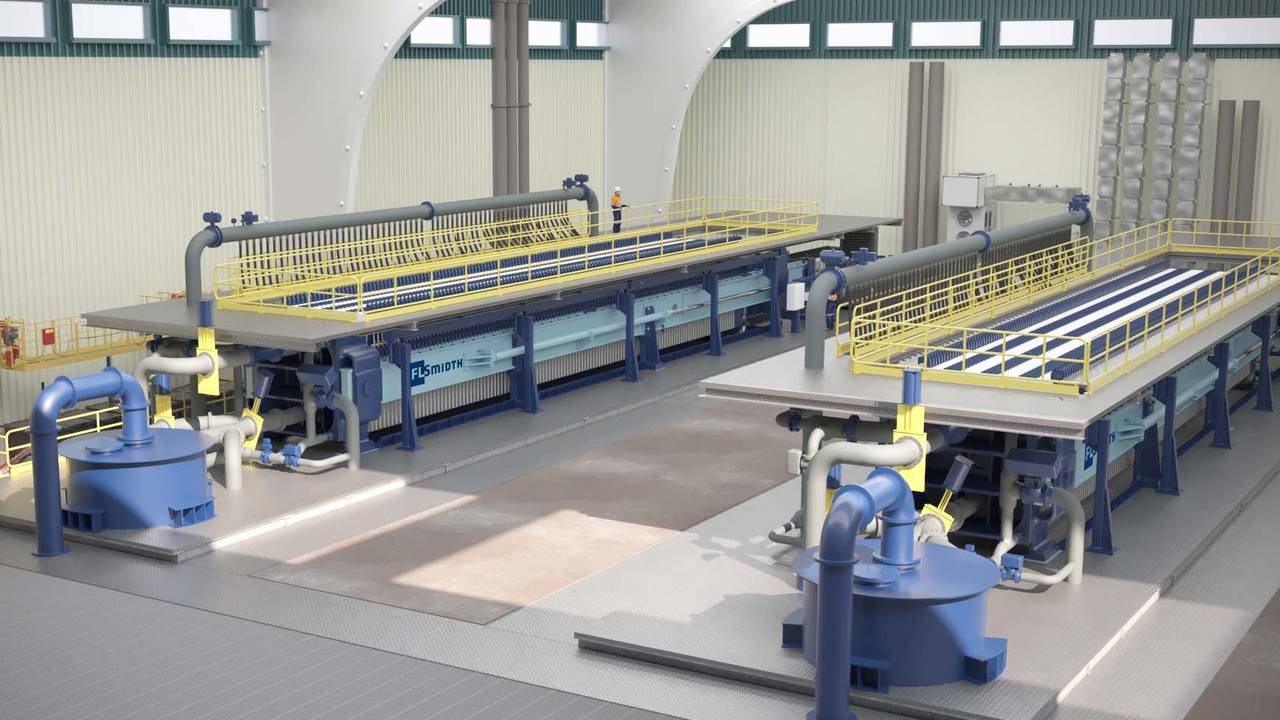
What Are the Benefits of an Automatic Filter Press?
Efficient solid-liquid separation is an essential requirement across many industrial processes. Whether an operation involves wastewater treatment, chemicals, pharmaceuticals, food processing, mining, ceramics, dyes, pigments, or other slurry-based processes, filtration efficiency can directly affect productivity, operating costs, waste handling, and final product quality.
An automatic filter press is designed to make this separation process faster, more consistent, and less dependent on manual labor. Unlike conventional manual filter presses, an automatic system can automate important stages such as hydraulic plate closing, pressure control, plate opening, plate shifting, cake discharge, and, depending on the configuration, filter cloth washing.
For industries processing significant quantities of slurry, these features can make an automatic filter press a valuable long-term investment.
So, what are the benefits of an automatic filter press? The major benefits include reduced manual labor, faster filtration cycles, consistent operation, improved workplace safety, efficient cake discharge, reduced downtime, better process control, and greater productivity.
Let us explore these advantages in detail.
What Is an Automatic Filter Press?
An automatic filter press is an industrial solid-liquid separation system in which several stages of the filtration cycle are performed automatically.
The basic filtration principle remains similar to that of a conventional filter press. Slurry containing liquid and suspended solids is pumped into chambers formed between filter plates. Filter cloth allows the liquid, known as filtrate, to pass through while retaining the solid particles. As filtration continues, the retained solids accumulate and form a filter cake.
The major difference is automation.
Instead of requiring workers to manually perform several repetitive tasks, an automatic filter press can use hydraulic systems, plate-shifting mechanisms, sensors, valves, pumps, and programmable controls to manage the filtration cycle.
Depending on the design and application, automatic functions may include:
- Hydraulic plate closing and opening
- Automatic slurry feeding
- Pressure monitoring
- Automatic plate shifting
- Automatic cake discharge
- Filter cloth washing
- Pump and valve control
- Cycle monitoring
- Safety controls
This automation can significantly improve the efficiency and repeatability of industrial filtration.
If you are evaluating filtration equipment for your plant, you can contact our filter press experts to discuss your slurry characteristics, filtration requirements, and suitable equipment configuration.
1. Reduced Manual Labor
One of the most important benefits of an automatic filter press is the reduction in manual labor.
Traditional filter presses may require operators to open the press, move individual plates, remove filter cakes, inspect the cloth, and prepare the system for another filtration cycle.
When these processes are automated, operators do not need to perform every repetitive mechanical task manually.
This can be particularly valuable in facilities that operate several filtration cycles every day.
Reduced manual intervention can help businesses:
- Use manpower more efficiently
- Reduce repetitive operator tasks
- Handle higher production volumes
- Improve overall workflow
- Allow employees to focus on monitoring and other production activities
Automation does not necessarily eliminate the need for trained operators. Instead, it changes their role from performing repetitive physical tasks to monitoring equipment performance and maintaining efficient process conditions.
2. Faster Filtration Cycles
Production efficiency is closely connected to filtration cycle time.
Once filtration is completed in a manual system, additional time may be required to open the press, shift plates, discharge cake, clean components, and prepare for the next batch.
Automatic filter presses are designed to reduce the time required for these intermediate operations.
Automatic plate shifting and cake discharge can help the machine move more quickly from one filtration cycle to the next. Some advanced systems also incorporate simultaneous or grouped plate-opening mechanisms to further reduce cake-discharge time.
Shorter cycle times can potentially mean more filtration cycles during a production shift.
For high-volume operations, even relatively small reductions in cycle time can contribute to substantial productivity improvements over the long term.
3. Increased Overall Productivity
Reduced labor requirements and faster cycles combine to create another major advantage: higher productivity.
An automatic filter press can perform repetitive operations according to predefined process settings, allowing production to continue with less operator involvement.
This makes automatic filtration particularly attractive for industries dealing with:
- Large quantities of slurry
- Multiple batches per day
- High production targets
- Limited manpower
- Strict processing schedules
The actual increase in throughput depends on factors such as slurry composition, solids concentration, filter area, feeding pressure, cake characteristics, filter cloth, and machine configuration.
Therefore, selecting the right filter press capacity is just as important as choosing automation.
4. More Consistent Filtration Performance
Manual operations can vary from one operator or shift to another. Automation helps reduce this variability by controlling important operating steps according to established parameters.
For example, an automatic system may consistently control:
- Feeding sequences
- Pump operation
- Hydraulic closing
- Filtration pressure
- Plate movement
- Cake discharge
- Washing sequences
- Cycle timing
More consistent operating conditions can help provide more repeatable filtration results.
This can be particularly important in industries where product quality, filtrate clarity, cake characteristics, or production consistency matters.
Automation therefore offers more than convenience—it can improve overall process repeatability.
5. Improved Workplace Safety
Industrial filter presses contain large plates, hydraulic components, pressurized slurry, and heavy filter cakes. Frequent manual interaction with these components can expose operators to mechanical and process-related hazards.
Automatic operation reduces the need for workers to physically interact with the machine during routine filtration and cake-discharge stages.
Modern automatic filter press systems may also incorporate safety features such as sensors, emergency stops, safety guards, pressure monitoring, alarms, and safety light curtains depending on their design.
By reducing unnecessary manual handling, an automatic filter press can support a safer working environment when installed, operated, and maintained according to appropriate safety procedures.
Operators must still receive proper training and follow the manufacturer's operating and maintenance guidelines.
6. Efficient Filter Cake Discharge
Cake discharge can be one of the more labor-intensive stages of filter press operation.
After filtration is completed, the filter plates must be opened so that accumulated solids can be discharged.
Automatic plate-shifting systems can sequentially or simultaneously move the plates, allowing filter cakes to drop from the chambers with much less manual intervention.
Efficient cake discharge helps:
- Reduce unloading time
- Minimize manual plate handling
- Prepare the press for another cycle faster
- Improve overall production flow
- Reduce operator workload
Cake-release performance will still depend on the slurry, filter cloth selection, cake properties, operating conditions, and machine design.
If your existing filtration process is experiencing slow cake discharge or excessive manual handling, speak with our filtration specialists about an automatic filter press configuration suitable for your application.
7. Potential for Drier Filter Cake
One of the primary objectives of a filter press is effective dewatering.
A properly selected and operated filter press can produce a compact cake with relatively low moisture compared with many basic solid-liquid separation approaches. When an automatic press incorporates membrane squeezing or other advanced dewatering stages, additional liquid may be removed from the cake after initial filtration.
A drier cake can offer important operational advantages.
It may:
- Reduce the volume or weight of material requiring disposal
- Make cake handling easier
- Reduce transportation requirements
- Improve recovery of valuable liquid
- Support further processing of solids
However, final cake moisture is not determined by automation alone. Slurry characteristics, filtration pressure, membrane squeezing, cake thickness, feed concentration, filtration time, and filter cloth selection all influence the result.
8. Reduced Downtime Between Cycles
Downtime has a direct impact on productivity.
Manual cake removal, plate handling, cleaning, and preparation can extend the period between filtration cycles.
Automation helps streamline these operations.
Features such as automatic plate shifting, automated cake discharge, automatic cloth washing, and programmed cycle control can reduce the amount of non-productive time between batches.
This is particularly beneficial for plants operating multiple shifts or processing large quantities of material.
Less downtime means that more of the machine's available operating time can be dedicated to productive filtration.
9. Automatic Filter Cloth Washing
Filter cloth plays a critical role in filter press performance.
Over time, fine solids can become trapped in or on the cloth, potentially reducing permeability and affecting filtration performance. Regular cleaning is therefore essential.
Certain automatic filter press configurations include an automatic filter cloth washing system.
High-pressure washing mechanisms can clean cloth surfaces according to a programmed sequence, reducing the need for frequent manual washing.
Effective cloth cleaning can help:
- Maintain filtration performance
- Reduce cloth blockage
- Maintain filtrate flow
- Support consistent filtration cycles
- Potentially extend useful cloth life when properly maintained
The appropriate washing frequency depends on the slurry and application.
10. Better Process Control
Modern industrial operations increasingly depend on accurate process control.
Automatic filter presses can incorporate programmable logic controllers (PLCs), sensors, pressure monitoring systems, and control panels that allow operators to manage important filtration parameters.
Rather than relying entirely on manual judgment, operators can monitor process conditions and configure operating sequences according to production requirements.
Depending on the equipment configuration, the system may provide information relating to pressure, cycle status, pump operation, valves, safety conditions, and other process parameters.
Better control can make troubleshooting easier and help operators identify process irregularities before they develop into larger production problems.
11. Reduced Human Error
Even experienced operators can make mistakes during repetitive industrial tasks.
Incorrect timing, inconsistent pressure settings, incomplete plate closing, or irregular operating sequences can affect filtration performance.
Automation helps minimize this risk by executing predefined operations in a controlled sequence.
Once suitable process parameters have been established, the machine can repeat them consistently from one cycle to another.
This is particularly useful in applications where standardized production conditions are important.
12. Lower Long-Term Operating Costs
An automatic filter press may require a higher initial investment than a basic manual filter press. However, businesses should evaluate equipment based on total lifecycle cost rather than purchase price alone.
Automation can potentially reduce long-term operating costs through:
- Lower manual labor requirements
- Faster production cycles
- Reduced downtime
- Efficient cake discharge
- Consistent operation
- Improved equipment utilization
- Better process control
The actual return on investment will depend on production volume, labor costs, operating hours, slurry characteristics, maintenance requirements, and equipment configuration.
For a high-volume industrial facility, the productivity improvements offered by automation may justify the additional initial investment.
13. Suitable for a Wide Range of Industries
Another major advantage of automatic filter presses is their versatility.
They can be configured for solid-liquid separation applications across numerous industries, including:
- Wastewater and effluent treatment
- Chemical processing
- Pharmaceuticals
- Food processing
- Mining and mineral processing
- Ceramics
- Pigments and dyes
- Metal processing
- Sludge dewatering
- Industrial manufacturing
Because every slurry behaves differently, filter press selection should be based on application-specific requirements rather than using a one-size-fits-all approach.
Factors such as solids concentration, particle size, chemical compatibility, required cake dryness, desired filtrate quality, operating temperature, capacity, and cycle frequency should all be evaluated.
For application-specific recommendations, request an automatic filter press consultation before finalizing your equipment.
14. Better Scalability for Growing Industries
Production requirements often increase as a business grows.
A filtration system that works adequately at a small production level may eventually become a bottleneck when processing volumes increase.
Automatic filter presses are well suited to operations where production capacity and repeatability are priorities.
By reducing manual handling and shortening non-filtration stages, automation can make it easier to process larger volumes without increasing manpower at the same rate.
This scalability makes automatic filtration worth considering when planning future plant expansion.
Automatic Filter Press vs. Manual Filter Press
The primary difference between automatic and manual filter presses is the amount of operator involvement required.
A manual filter press generally requires more operator participation for plate handling and cake discharge. It may be suitable for smaller operations, occasional filtration, or facilities where capital investment needs to be minimized.
An automatic filter press uses hydraulic, mechanical, electrical, and control systems to automate several stages of operation.
Automatic presses are generally more suitable when:
- Filtration is performed frequently
- Production volumes are high
- Fast cycle turnaround is required
- Labor efficiency is important
- Consistent operation is necessary
- Manual cake discharge is becoming a bottleneck
- Future production growth is expected
The best option depends on your application's technical and economic requirements.
How to Choose the Right Automatic Filter Press
Selecting an automatic filter press should begin with understanding the material being filtered.
Important factors include slurry volume, solids percentage, particle characteristics, chemical composition, temperature, viscosity, desired filtrate clarity, required cake moisture, operating hours, and production capacity.
You should also consider:
- Required filtration area
- Plate size and plate type
- Filter cloth material
- Hydraulic system
- Feed pump selection
- Required automation level
- Cake discharge mechanism
- Cloth washing requirements
- Safety features
- Maintenance accessibility
- Availability of spare parts
- Manufacturer's technical support
A properly sized filter press can provide far better performance than simply selecting equipment based on price or plate dimensions.
Why Consider Panama Engineering for Filter Press Requirements?
Panama Engineering provides industrial filter press solutions and has experience in filter press manufacturing and installation. The company states that it has been operating in the filter press field since 1970 and provides equipment as well as consultation for filtration requirements.
Depending on your industrial application, the appropriate filter press may require customization based on slurry properties, filtration capacity, operating pressure, automation requirements, and desired cake characteristics.
Instead of selecting a machine solely from standard specifications, discussing your process requirements with an experienced filtration equipment provider can help determine an appropriate configuration.
For assistance selecting equipment, contact Panama Engineering for filter press solutions and share details about your application, slurry, required capacity, and filtration goals.
Frequently Asked Questions About Automatic Filter Presses
What is the main benefit of an automatic filter press?
The primary benefit is greater filtration efficiency with reduced manual intervention. Automated plate movement, cake discharge, cycle control, and optional cloth washing can reduce labor requirements and shorten turnaround time between filtration cycles. Automatic systems are commonly designed to improve productivity, safety, and process consistency.
Does an automatic filter press reduce labor costs?
It can. Automation reduces the number of repetitive tasks that operators must perform manually, particularly plate shifting and cake discharge. This can lower labor requirements associated with each filtration cycle.
Is an automatic filter press better than a manual filter press?
Neither is universally better. Manual filter presses can be economical for smaller or less frequent applications, while automatic filter presses are generally better suited to higher-volume operations where productivity, repeatability, and reduced manual handling are priorities.
Can an automatic filter press produce dry filter cake?
Filter presses are effective dewatering systems, and membrane configurations can further reduce cake moisture by applying an additional squeezing stage. However, actual cake dryness depends on slurry characteristics and operating conditions, not automation alone.
Which industries use automatic filter presses?
Automatic filter presses are commonly used in wastewater treatment, chemicals, mining, pharmaceuticals, food processing, ceramics, pigments, dyes, and other industrial solid-liquid separation processes.
Is an automatic filter press suitable for wastewater treatment?
Yes. Automatic filter presses can be used for sludge dewatering in wastewater and effluent treatment applications. They separate liquid from suspended solids and produce a filter cake that can be handled for appropriate disposal or further treatment.
Conclusion
An automatic filter press offers significant advantages for industries that require reliable and efficient solid-liquid separation. Its key benefits include reduced manual labor, faster cycle times, higher productivity, improved process consistency, better workplace safety, efficient cake discharge, reduced downtime, improved process control, and easier handling of high-volume filtration requirements.
Automation is especially valuable when filtration is a frequent or critical part of the production process. However, achieving the best results depends on choosing the correct press size, plate design, filter cloth, feed system, operating pressure, and automation features for the specific slurry.
Rather than simply replacing manual work with machinery, an automatic filter press can become an important part of a more controlled, scalable, and productive filtration process.
For industries considering a new filter press or upgrading an existing filtration system, evaluating the complete process requirements before purchasing equipment can help maximize long-term performance and return on investment.
Explore Automatic Filter Press Systems
For equipment-level information, visit our automatic filter press page. You can also compare the hydraulic filter press or send your requirement.
Explore Filter Press Solutions
Continue your research with our filter press machines, filter press plates and technical enquiry pages.
Send Your Requirement