
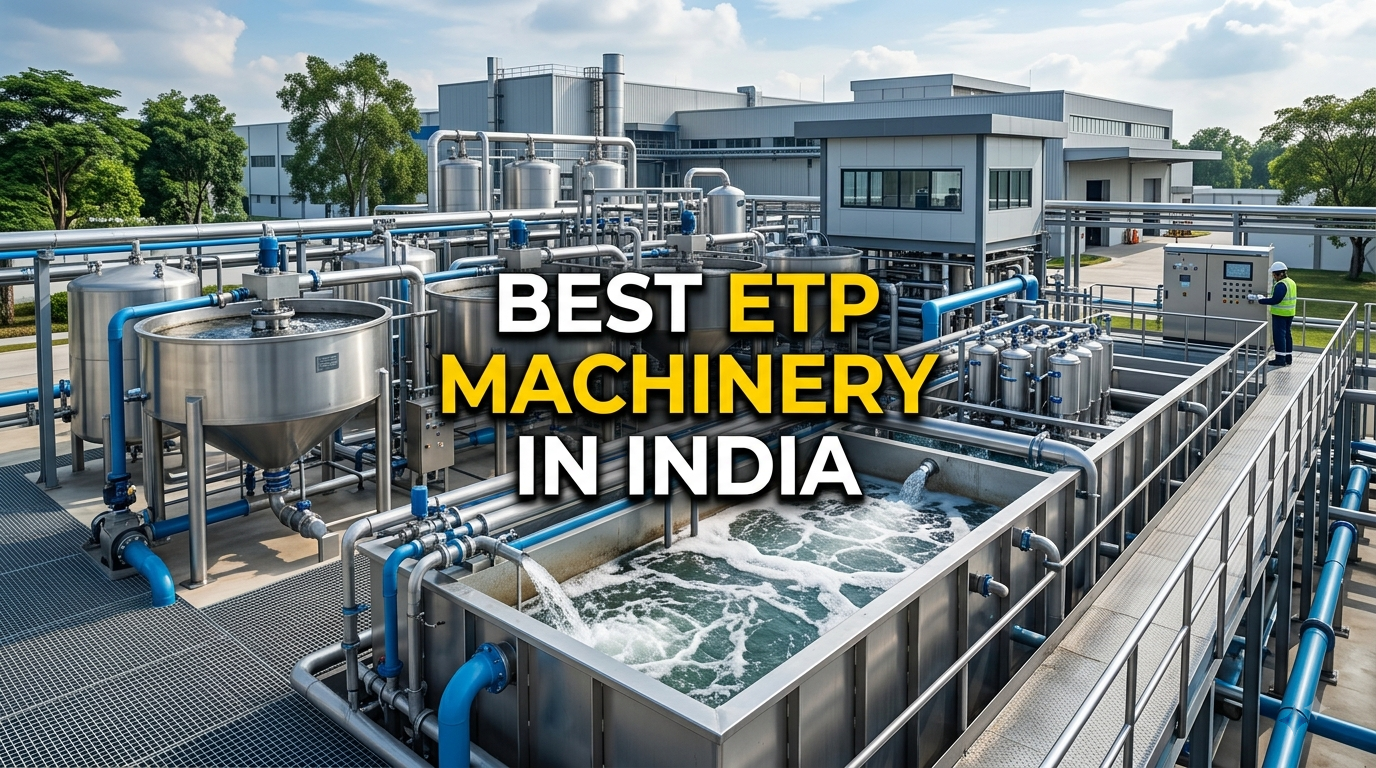
Best ETP Machinery in India: Complete Guide to Choosing the Right Equipment
Finding the Best ETP Machinery in India is essential for industries that need reliable, efficient, and compliant wastewater treatment. An Effluent Treatment Plant (ETP) is designed to treat industrial wastewater before it is reused or safely discharged.
However, choosing ETP machinery is not simply about purchasing individual machines. The right selection depends on wastewater characteristics, flow rate, treatment technology, space availability, automation requirements, operating costs, and the quality of treated water required.
From effluent treatment plants and filter presses to clarifiers, aeration systems, sludge handling equipment, pumps, and filtration systems, every component plays an important role in overall plant performance.
This guide explains the major types of ETP machinery available in India, their applications, selection criteria, benefits, and important questions to consider before purchasing.
What Is ETP Machinery?
ETP machinery refers to the equipment used in an Effluent Treatment Plant to collect, treat, separate, filter, and manage industrial wastewater and sludge.
Depending on the industry and wastewater characteristics, an ETP may use physical, chemical, biological, and advanced treatment processes.
Common ETP machinery includes:
- Effluent transfer pumps
- Bar screens
- Oil and grease separators
- Equalization tanks and mixers
- Chemical dosing systems
- Flash mixers
- Flocculators
- Primary and secondary clarifiers
- Aeration systems
- Tube settlers
- Pressure sand filters
- Activated carbon filters
- Membrane filtration systems
- Filter presses
- Sludge dewatering equipment
- RO systems
- UV disinfection systems
- Online monitoring and automation systems
The machinery required varies from one industry to another. A textile factory, pharmaceutical manufacturer, food-processing unit, and chemical plant may require completely different treatment configurations.
Why Choosing the Best ETP Machinery in India Matters
The quality of machinery directly affects the performance, reliability, and operating cost of an ETP.
Well-selected equipment can help industries:
- Improve wastewater treatment efficiency
- Reduce sludge-handling problems
- Maintain consistent treated-water quality
- Reduce manual intervention
- Improve plant reliability
- Optimize chemical consumption
- Reduce energy consumption
- Support water recycling and reuse
- Make plant maintenance easier
- Improve compliance with applicable environmental requirements
The goal should not simply be to buy the cheapest machinery. Instead, industries should focus on lifecycle value, treatment performance, durability, energy efficiency, service support, and compatibility with the complete ETP design.
Types of ETP Machinery Used in India
Different machines perform different functions within an effluent treatment system.
1. Effluent Transfer Pumps
Pumps transport wastewater between different stages of the ETP.
Depending on the wastewater, industries may require pumps designed for:
- High-solid wastewater
- Corrosive liquids
- Sludge
- Chemical solutions
- High-flow applications
Pump selection should consider flow rate, head, fluid characteristics, temperature, and solids concentration.
2. Bar Screens
Bar screens are generally installed near the inlet of an ETP.
Their primary function is to remove larger materials such as:
- Plastics
- Fibers
- Packaging material
- Rags
- Wood pieces
- Other floating debris
Removing large solids at the beginning protects downstream equipment from clogging and mechanical damage.
3. Equalization Tank Equipment
Industrial wastewater flow and composition can change throughout the day.
An equalization system helps balance these variations before wastewater enters subsequent treatment stages.
Typical equipment includes:
- Submersible mixers
- Mechanical mixers
- Aeration equipment
- Level sensors
- Transfer pumps
Proper equalization can improve the stability of chemical and biological treatment processes.
4. Chemical Dosing Systems
Chemical dosing systems accurately introduce treatment chemicals into wastewater.
Depending on the process, chemicals may be used for:
- pH adjustment
- Coagulation
- Flocculation
- Neutralization
- Disinfection
- Precipitation
A good dosing system provides controlled chemical addition and helps prevent unnecessary chemical consumption.
5. Clarifiers
Clarifiers are used to separate suspended solids from treated wastewater.
During clarification, heavier particles settle at the bottom while relatively clear water moves toward the next treatment stage.
Common configurations include:
- Primary clarifiers
- Secondary clarifiers
- Tube settlers
- Lamella clarifiers
The appropriate clarifier depends on wastewater characteristics, hydraulic loading, solids concentration, and required treatment performance.
6. Aeration Systems
Aeration is an important component of biological wastewater treatment.
Aeration equipment supplies oxygen to microorganisms that break down biodegradable organic matter.
Common aeration equipment includes:
- Fine-bubble diffusers
- Coarse-bubble diffusers
- Surface aerators
- Roots blowers
- Air distribution systems
Energy consumption should be carefully considered because aeration can represent a significant portion of an ETP's operating energy requirements.
7. Filter Press
A filter press is commonly used for sludge dewatering.
It separates liquid from sludge by applying pressure through a series of filter plates and filter cloths.
A filter press can help produce a relatively dry filter cake, making sludge easier to:
- Handle
- Transport
- Store
- Dispose of
- Further process
When evaluating filter press equipment, consider filtration area, plate size, sludge characteristics, cycle time, automation level, and maintenance requirements.
8. Pressure Sand Filter
Pressure sand filters remove suspended particles from wastewater through a filtration media bed.
They are often used as a polishing step after clarification.
Benefits can include:
- Reduction of suspended solids
- Improved water clarity
- Protection of downstream equipment
- Better performance of subsequent filtration systems
9. Activated Carbon Filter
Activated carbon filters are primarily used to reduce certain dissolved organic compounds, color, odor, and other contaminants that can be adsorbed onto carbon.
They can be particularly useful when wastewater requires additional polishing after conventional treatment.
10. Membrane Filtration Systems
Membrane technologies can provide advanced wastewater treatment.
Depending on the treatment requirement, systems may include:
- Ultrafiltration (UF)
- Nanofiltration (NF)
- Reverse osmosis (RO)
These technologies are useful where industries require higher-quality treated water for reuse or further treatment.
Best ETP Machinery Selection: What Should You Consider?
There is no single machine that can be called the best for every ETP. The best ETP machinery is the equipment that matches the wastewater, treatment objective, plant capacity, and operating conditions of a specific facility.
Consider the following factors before making a purchase.
1. Wastewater Characteristics
First understand the wastewater.
Important parameters may include:
- pH
- COD
- BOD
- TSS
- TDS
- Oil and grease
- Heavy metals
- Color
- Temperature
- Toxic or inhibitory compounds
Laboratory testing and wastewater characterization can help determine the appropriate treatment process.
2. ETP Capacity
Machinery should be sized according to wastewater flow.
Capacity may be expressed in:
- KLD
- MLD
- Litres per hour
- Cubic metres per hour
Oversized or undersized equipment can both create operational problems.
3. Treatment Technology
Different industries require different treatment technologies.
For example:
Treatment Requirement
Possible Equipment
Large solid removal
Bar screen
Flow balancing
Equalization system
pH adjustment
Chemical dosing system
Suspended solids removal
Clarifier
Biological treatment
Aeration system
Sludge dewatering
Filter press
Fine filtration
Sand filter
Organic adsorption
Activated carbon filter
Advanced water recovery
UF/NF/RO
The final equipment combination should be based on process design rather than individual machine specifications.
ETP Machinery for Different Industries
Different industries generate different types of effluent.
Textile Industry
Textile wastewater may contain color, chemicals, suspended solids, and high organic loads.
Treatment systems may incorporate:
- Chemical dosing
- Clarification
- Biological treatment
- Filtration
- Advanced oxidation or membrane processes where required
Pharmaceutical Industry
Pharmaceutical wastewater can have complex chemical characteristics and variable organic loads.
Treatment may require carefully designed:
- Equalization
- Chemical treatment
- Biological treatment
- Filtration
- Sludge management
Food Processing Industry
Food and beverage wastewater commonly contains biodegradable organic matter, suspended solids, fats, oils, and grease.
Biological treatment and solids separation can therefore be important.
Chemical Industry
Chemical wastewater can vary significantly in pH, dissolved solids, organic compounds, and potentially hazardous contaminants.
Treatment equipment must be selected based on detailed wastewater analysis and material compatibility.
Dairy Industry
Dairy wastewater can contain high organic loads, fats, oils, grease, and suspended solids.
A suitable ETP may use screening, equalization, biological treatment, clarification, and sludge management.
ETP Machinery vs Complete ETP System
It is important to understand the difference between ETP machinery and an ETP system.
Machinery refers to individual equipment such as pumps, clarifiers, filter presses, mixers, and filtration units.
A complete ETP is an integrated treatment system where these components work together according to a specific process design.
For example:
Collection → Screening → Equalization → Chemical Treatment → Biological Treatment → Clarification → Filtration → Advanced Treatment → Reuse/Discharge
The exact sequence varies according to wastewater characteristics and treatment objectives.
How to Choose an ETP Machinery Manufacturer in India
Choosing the right manufacturer or supplier is as important as choosing the equipment.
Look for a company that can provide:
- Technical consultation
- Wastewater treatment expertise
- Proper equipment sizing
- Customized engineering
- Quality manufacturing
- Installation support
- Commissioning
- Operator training
- Spare parts
- Preventive maintenance
- After-sales service
Ask potential suppliers for technical documentation and clearly defined equipment specifications.
Advantages of Modern ETP Machinery
Modern ETP equipment can offer several operational advantages.
Better Treatment Efficiency
Properly designed machinery can improve the consistency of wastewater treatment.
Lower Manual Intervention
Automation, sensors, and control systems can reduce repetitive manual operations.
Improved Sludge Management
Efficient dewatering equipment can reduce the volume and handling burden of sludge.
Water Recovery
Advanced treatment technologies can make treated wastewater suitable for selected reuse applications, subject to quality requirements.
Better Process Control
Sensors and automation can help operators monitor parameters and respond to process changes.
Automation in Modern ETPs
Automation is becoming increasingly important in industrial wastewater treatment.
An automated ETP may include:
- PLC control panels
- Flow meters
- pH sensors
- Level sensors
- Pressure sensors
- Dosing controls
- Variable-frequency drives
- Remote monitoring systems
- Alarm systems
Automation does not replace proper process design, but it can make plant operation more consistent and easier to monitor.
What Is the Cost of ETP Machinery in India?
The cost of ETP machinery varies considerably.
There is no single standard price because the total investment depends on:
- Plant capacity
- Wastewater characteristics
- Treatment technology
- Equipment material
- Automation level
- Number of treatment stages
- Civil construction
- Installation requirements
- Sludge management system
- Filtration or membrane requirements
- Operation and maintenance requirements
A small industrial treatment system may require very different equipment from a large high-capacity ETP.
Therefore, businesses should request a site-specific technical proposal and equipment quotation instead of relying on generic price lists.
Common Mistakes When Buying ETP Machinery
Businesses can face avoidable problems when equipment is selected only on price.
Mistake 1: Choosing Equipment Without Wastewater Testing
Without knowing wastewater characteristics, machinery may not perform as expected.
Mistake 2: Focusing Only on Purchase Price
A low-cost machine may have higher energy, maintenance, or replacement costs.
Mistake 3: Ignoring After-Sales Support
Downtime can become expensive if spare parts and technical support are difficult to obtain.
Mistake 4: Incorrect Equipment Sizing
Equipment should be selected based on actual flow, peak flow, loading, and process requirements.
Mistake 5: Ignoring Material Compatibility
Corrosive or chemically aggressive wastewater may require specific materials of construction.
People Also Ask: Best ETP Machinery in India
What is the best machinery for an ETP?
There is no universal best ETP machine. The right equipment depends on wastewater characteristics, flow rate, treatment objectives, industry type, and required treated-water quality.
Which equipment is used for sludge dewatering in an ETP?
Filter presses, screw presses, centrifuges, and other sludge-dewatering systems can be used depending on sludge characteristics and plant requirements.
Which industries need ETP machinery?
Industries such as textiles, pharmaceuticals, chemicals, food processing, dairy, metal finishing, paper, and other manufacturing sectors may require ETP systems depending on their wastewater generation and applicable requirements.
How do I choose ETP machinery?
Start with wastewater testing and process design. Then evaluate equipment capacity, material compatibility, energy consumption, automation, maintenance, reliability, and supplier support.
Is a filter press necessary for every ETP?
Not necessarily. The need for a filter press depends on the sludge-generation rate, sludge characteristics, dewatering requirements, and overall ETP design.
What is the role of a clarifier in an ETP?
A clarifier separates suspended solids from wastewater through sedimentation. It can be used as a primary or secondary treatment component depending on the process design.
Can ETP machinery help with water reuse?
Yes. When combined with suitable treatment technologies, an ETP can produce water suitable for selected reuse applications. The required treatment depends on the intended reuse and water-quality specifications.
FAQs: Best ETP Machinery in India
1. What does ETP machinery include?
ETP machinery includes equipment such as pumps, screens, mixers, chemical dosing systems, clarifiers, aeration equipment, filters, sludge dewatering machines, membranes, and automation systems.
2. What is the most important ETP machine?
No single machine is universally the most important. ETP performance depends on how the complete treatment system is designed and how its individual components work together.
3. Which ETP machinery is suitable for industrial wastewater?
The suitable machinery depends on the industry's wastewater composition, flow rate, contaminants, treatment objectives, and discharge or reuse requirements.
4. How can I reduce ETP operating costs?
Operating costs can be managed through appropriate equipment sizing, energy-efficient pumps and aeration systems, optimized chemical dosing, preventive maintenance, process monitoring, and effective sludge management.
5. Should ETP machinery be automated?
Automation can be highly beneficial for monitoring and controlling an ETP, particularly in plants where wastewater characteristics and operating conditions vary.
6. How long does ETP machinery last?
Equipment life depends on construction material, wastewater characteristics, operating conditions, maintenance, equipment quality, and usage. Regular preventive maintenance can help extend service life.
Conclusion
Selecting the Best ETP Machinery in India is ultimately about finding the right combination of technology, equipment quality, process performance, operating efficiency, and technical support.
Instead of choosing machinery based solely on price, industries should begin with wastewater analysis and proper ETP process design. Equipment should then be selected according to capacity, contaminant profile, treatment objectives, energy requirements, material compatibility, automation needs, maintenance requirements, and long-term operating costs.
From pumps and clarifiers to aeration systems, filter presses, filtration equipment, and advanced membrane technologies, every component has a specific role in creating an efficient wastewater treatment system.
For businesses planning a new ETP or upgrading an existing facility, working with an experienced ETP machinery manufacturer or wastewater-treatment specialist can help ensure that the selected equipment is technically appropriate, reliable, and practical for long-term operation.
ETP Machinery Selection
Industrial ETP equipment should be selected around the treatment process and sludge-handling requirement. Explore our ETP filter press information or request technical guidance.
Explore Filter Press Solutions
Continue your research with our filter press machines, filter press plates and technical enquiry pages.
Send Your Requirement