
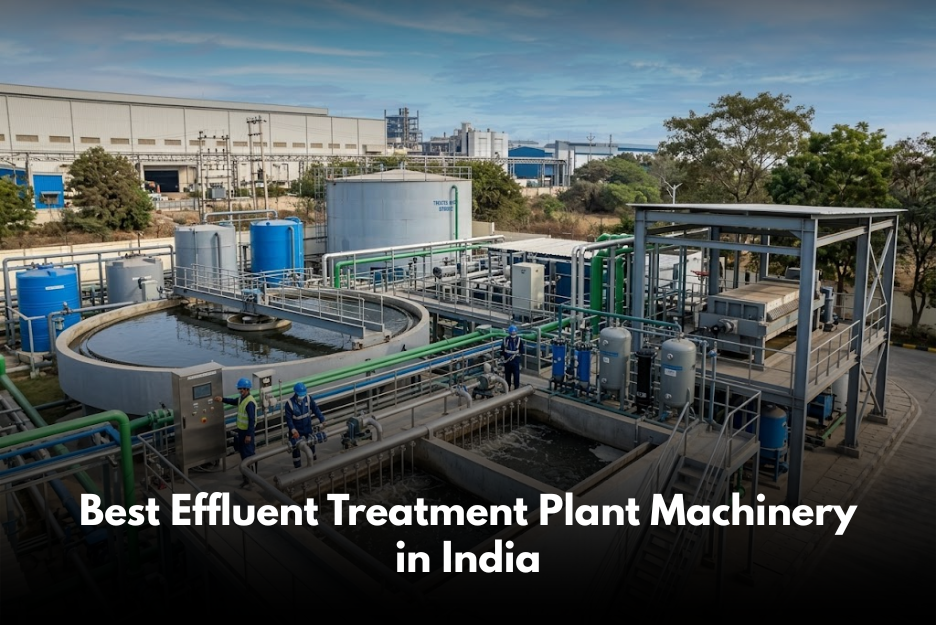
Industrial wastewater management has become a critical priority for businesses across India. With stricter environmental regulations and growing awareness around sustainability, choosing the Best Effluent Treatment Plant Machinery in India is now essential for industries that generate wastewater.
Whether you operate in textiles, pharmaceuticals, chemicals, food processing, dairy, or manufacturing, the right Effluent Treatment Plant (ETP) machinery helps ensure legal compliance, reduces water pollution, and improves water reuse.
In this guide, we’ll explore everything you need to know about effluent treatment machinery, including types, working principles, key components, selection criteria, and top benefits.
What is an Effluent Treatment Plant (ETP)?
An Effluent Treatment Plant (ETP) is a wastewater treatment system designed to treat industrial effluent before discharge or reuse. Its main objective is to remove harmful contaminants such as:
- Suspended solids
- Chemicals
- Oil and grease
- Heavy metals
- Organic waste
- Toxic pollutants
The treated water can either be safely discharged into the environment or recycled for industrial use.
Effluent Treatment Plant machinery includes equipment used to clean industrial wastewater by removing physical, chemical, and biological contaminants.
Why ETP Machinery is Important in India
India’s rapid industrial growth has increased wastewater generation significantly. Regulatory authorities such as the Central Pollution Control Board (CPCB) and State Pollution Control Boards (SPCBs) enforce strict discharge standards.
Using advanced ETP machinery helps industries:
- Meet pollution control norms
- Reduce environmental damage
- Lower freshwater consumption
- Improve sustainability ratings
- Avoid legal penalties
For many industries, ETP installation is no longer optional—it is mandatory.
Types of Effluent Treatment Plant Machinery
Different industries require different treatment setups. Below are the most important ETP machinery components.
1. Bar Screen Chamber
This is the first stage of treatment.
It removes large solids such as:
- Plastic
- Cloth
- Wood
- Packaging waste
Benefits:
- Prevents clogging
- Protects downstream equipment
- Reduces maintenance costs
2. Equalization Tank with Agitator
Wastewater flow and pollutant load fluctuate throughout the day.
An equalization tank:
- Balances flow
- Maintains consistent treatment
- Prevents shock loads
Agitators keep wastewater uniformly mixed.
3. Chemical Dosing System
Chemical dosing systems add treatment chemicals such as:
- Lime
- Alum
- PAC
- Polyelectrolytes
- Caustic soda
Purpose:
- pH correction
- Coagulation
- Flocculation
- Contaminant precipitation
This stage is critical for chemical industries.
4. Clarifier Tank
Clarifiers separate sludge from water through sedimentation.
Key Function:
Heavy particles settle at the bottom while clean water flows upward.
Clarifiers improve:
- Water clarity
- Sludge separation
- Treatment efficiency
5. Air Blower System
Air blowers supply oxygen to biological treatment systems.
Oxygen supports bacterial growth that breaks down organic waste.
Common applications:
- Activated sludge process
- Aeration tanks
- Biological reactors
6. Aeration Tank
The aeration tank is one of the most important ETP components.
Here, microorganisms digest:
- Organic pollutants
- Dissolved waste
- Biodegradable contaminants
Advantages:
- High BOD removal
- High COD reduction
- Better treatment efficiency
7. Filter Press Machine
A filter press is widely regarded as one of the best effluent treatment plant machinery in India for sludge dewatering.
It compresses sludge to remove water and produce dry sludge cakes.
Benefits:
- Reduces sludge volume
- Low disposal cost
- Easy sludge handling
- Better operational efficiency
Learn more about filter press systems here:
Effluent Treatment Plant Solutions
8. Pressure Sand Filter (PSF)
PSF removes:
- Fine suspended particles
- Turbidity
- Residual solids
It improves water clarity significantly.
9. Activated Carbon Filter (ACF)
Activated carbon removes:
- Color
- Odor
- Organic compounds
- Chemical residues
This is useful in pharmaceutical and chemical industries.
10. Sludge Dewatering Equipment
Sludge handling is crucial in wastewater treatment.
Popular sludge dewatering machinery includes:
- Filter Press
- Screw Press
- Centrifuge
- Belt Press
Best Effluent Treatment Plant Machinery Comparison
Machinery
Function
Best For
Bar Screen
Removes large solids
All industries
Equalization Tank
Balances wastewater
Variable load industries
Chemical Dosing
Chemical treatment
Chemical/pharma
Clarifier
Settling solids
High suspended solids
Aeration Tank
Biological treatment
Organic wastewater
Filter Press
Sludge dewatering
High sludge generation
Sand Filter
Fine filtration
Final polishing
Carbon Filter
Removes odor/color
Pharma/textile
Industries That Need ETP Machinery in India
The demand for ETP machinery is rising in:
- Textile industry
- Pharmaceutical industry
- Chemical plants
- Food processing units
- Dairy plants
- Paper mills
- Sugar mills
- Electroplating units
- Tanneries
- Automobile manufacturing
These industries generate wastewater with high pollution loads.
How to Choose the Best Effluent Treatment Plant Machinery in India
Selecting the right machinery depends on multiple factors.
1. Wastewater Characteristics
Analyze:
- pH
- BOD
- COD
- TDS
- TSS
- Oil content
Different contaminants require different treatment technologies.
2. Treatment Capacity
Capacity is measured in KLD (Kilo Liters per Day).
Common capacities:
- 10 KLD
- 50 KLD
- 100 KLD
- 500+ KLD
Choose machinery based on daily wastewater volume.
3. Automation Level
Modern ETP systems offer:
- PLC automation
- Sensor monitoring
- Remote control
- Smart alerts
Automation reduces labor and improves accuracy.
4. Energy Efficiency
Power-efficient machinery reduces operating cost.
Look for:
- Low-power blowers
- Efficient pumps
- Energy-saving motors
5. Maintenance Requirements
Low-maintenance systems reduce downtime.
Consider:
- Spare part availability
- Service support
- Equipment durability
Key Features of High-Quality ETP Machinery
The best machinery offers:
- Corrosion resistance
- Heavy-duty construction
- High treatment efficiency
- Long operational life
- Low maintenance
- Automation compatibility
Stainless steel and FRP construction are popular choices.
Benefits of Investing in Premium ETP Machinery
Environmental Benefits
- Lower water pollution
- Reduced contamination
- Improved sustainability
Financial Benefits
- Reduced water cost
- Lower penalties
- Better ROI
Operational Benefits
- Smooth plant operation
- Faster processing
- Reduced manpower
Approximate Cost of ETP Machinery in India
Pricing depends on:
- Capacity
- Material
- Automation
- Industry type
- Treatment complexity
Capacity
Estimated Price
Small ETP
₹2–8 Lakhs
Medium ETP
₹10–40 Lakhs
Large ETP
₹50 Lakhs–₹5 Cr+
Prices vary by manufacturer and project scope.
People Also Ask
Which machine is best for effluent treatment?
A filter press, aeration system, and clarifier are among the most important machines in an effluent treatment plant.
What is the cost of an ETP plant in India?
Small ETP systems start from around ₹2 lakhs, while large industrial systems can exceed ₹5 crore.
Which industries need effluent treatment?
Textile, chemical, pharma, dairy, food processing, and manufacturing industries commonly need ETP systems.
What is the main purpose of ETP machinery?
The main purpose is to treat industrial wastewater and remove harmful pollutants before discharge or reuse.
Frequently Asked Questions
Q1. What is the best effluent treatment plant machinery in India?
The best ETP machinery includes filter press systems, clarifiers, aeration tanks, chemical dosing units, and sludge dewatering systems.
Q2. Why is a filter press important in ETP?
A filter press reduces sludge moisture, making disposal easier and more cost-effective.
Q3. How much does ETP machinery cost?
ETP machinery costs can range from ₹2 lakhs to several crores depending on size and complexity.
Q4. Can treated water be reused?
Yes. Properly treated water can be reused for cooling, washing, and process operations.
Q5. Which industries use ETP systems most?
Textile, pharma, chemical, food processing, and metal industries heavily rely on ETP systems.
Conclusion
Choosing the Best Effluent Treatment Plant Machinery in India requires careful evaluation of wastewater characteristics, industry requirements, treatment capacity, and long-term operational costs.
The right ETP machinery not only ensures environmental compliance but also improves efficiency, reduces water consumption, and supports sustainable industrial growth.
If your business generates industrial wastewater, investing in high-quality ETP machinery is one of the smartest long-term decisions you can make. Advanced systems like filter presses, aeration units, clarifiers, and filtration equipment can deliver reliable performance while helping your business stay compliant and eco-friendly.
ETP Equipment and Filtration
For filtration within effluent treatment, review our ETP filter press page and send your wastewater or sludge-dewatering requirement.
Explore Filter Press Solutions
Continue your research with our filter press machines, filter press plates and technical enquiry pages.
Send Your Requirement