
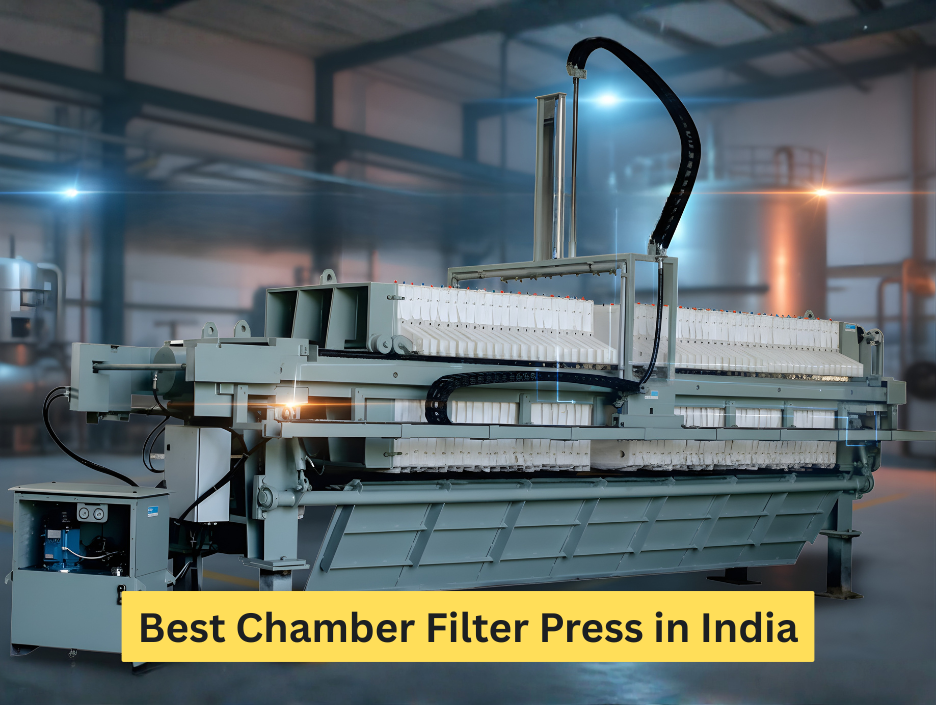
Best Chamber Filter Press in India: Efficient Solid-Liquid Separation for Industrial Applications
Industrial processes frequently generate slurry, wastewater, sludge, or liquid mixtures containing suspended solids that must be separated efficiently. From Effluent Treatment Plants (ETPs) and chemical manufacturing to ceramics, textiles, mining, pigments, food processing, paper, and stone processing, reliable filtration equipment can have a direct impact on productivity, waste handling, water recovery, and operating efficiency.
For industries searching for the Best Chamber Filter Press in India, selecting the right equipment involves much more than comparing machine size and purchase price. Filtration capacity, chamber volume, filter plate material, operating pressure, filter cloth, slurry characteristics, hydraulic system, automation, construction quality, and maintenance requirements should all be evaluated before making an investment.
A properly selected chamber filter press provides an effective method of solid-liquid separation by applying pressure to slurry and retaining solids inside recessed filtration chambers. The resulting filter cake can be easier to handle, transport, recover, or dispose of, while the separated filtrate may be reused, treated further, or discharged according to the process requirements.
This guide explains chamber filter press working principles, benefits, applications, selection criteria, maintenance, and important considerations when choosing a chamber filter press manufacturer in India.
What Is a Chamber Filter Press?
A chamber filter press is a pressure-filtration system that uses a series of recessed chamber filter plates to separate suspended solids from liquids.
Each filter plate has a recessed surface. When two adjacent plates are pressed together, the recessed areas create a chamber. Filter cloth is installed over the plates and acts as the filtration medium.
During operation, slurry is pumped into these chambers under controlled pressure. The liquid passes through the filter cloth and drainage channels, while suspended solid particles remain inside the chambers.
As filtration continues, the retained solids accumulate and gradually form a filter cake.
After the filtration cycle is completed, the feed pressure is released and the plates are opened. The filter cake can then be discharged before the machine begins another filtration cycle.
This relatively straightforward pressure-filtration principle makes chamber filter presses suitable for many industrial applications requiring dependable solid-liquid separation.
If you are evaluating a chamber filter press for your facility, contact our filter press experts to discuss your slurry, capacity, and process requirements.
How Does a Chamber Filter Press Work?
Understanding the operating cycle can help businesses select the correct filter press configuration.
1. Filter Plate Closing
The filtration cycle begins by bringing all chamber filter plates together.
A closing mechanism applies sufficient force to keep the plate pack securely closed during filtration. Depending on the machine configuration, this may be a mechanical or hydraulic closing arrangement.
Hydraulic systems are commonly preferred for larger industrial filter presses because they can provide controlled and consistent closing force.
2. Slurry Feeding
Once the filter press is securely closed, the feed pump begins transferring slurry into the filter chambers.
The slurry enters through the feed passage and is distributed throughout the plate pack.
Pump capacity, feed pressure, slurry concentration, and flow rate must be properly matched to the filter press.
3. Filtration
Filter cloth installed over the chamber plates retains suspended solids while allowing liquid to pass through.
The filtered liquid travels through drainage channels in the plates and leaves the machine as filtrate.
Depending on the process, this filtrate may be collected for reuse, sent for additional treatment, recovered as a process liquid, or handled according to plant requirements.
4. Filter Cake Formation
As more slurry is pumped into the press, solids continue to accumulate inside the recessed chambers.
The increasing layer of solids forms the filter cake.
Cake characteristics depend on several variables, including:
- Solids concentration
- Particle size
- Slurry viscosity
- Feed pressure
- Filtration time
- Filter cloth
- Chamber depth
- Process temperature
- Chemical composition
The filtration cycle continues until the chambers reach the desired level of cake formation or the operating endpoint is achieved.
5. Pressure Release
Before opening the filter press, pressure must be safely released according to the manufacturer's operating procedure.
Industrial filter presses operate under significant pressure, so proper operating practices and safety procedures are essential.
6. Cake Discharge
After pressure release, the filter plates are separated.
The formed cakes are discharged from between the plates. Depending on the machine configuration, plate opening and shifting may be manual, semi-automatic, or automatic.
Once the cake has been removed and the plates are ready, another filtration cycle can begin.
Why Choose a Chamber Filter Press?
Chamber filter presses are widely used because they offer a practical combination of filtration performance, equipment simplicity, versatility, and cake-handling capability.
Unlike traditional plate-and-frame filter presses that use separate frames between plates, a chamber filter press creates filtration chambers using recessed plates.
This configuration makes chamber filter presses particularly suitable for sludge dewatering and numerous industrial process-filtration applications.
Major Benefits of Chamber Filter Presses
Efficient Solid-Liquid Separation
One of the primary advantages of a chamber filter press is effective separation of suspended solids from liquid.
When the machine is correctly designed and paired with appropriate filter cloth, it can produce filtered liquid while concentrating solids into a manageable cake.
Effective Sludge Dewatering
Industrial sludge can contain a substantial amount of water.
Transporting and handling highly liquid sludge can increase operational complexity and disposal costs. A chamber filter press can remove a portion of this liquid and produce a more concentrated filter cake.
For wastewater-treatment facilities, this can simplify subsequent sludge handling.
Defined Cake Volume
Recessed chamber plates create a fixed filtration space.
This means each chamber has a defined cake-holding volume, helping operators plan filtration cycles according to the amount of solids being processed.
Reduced Sludge Volume
By separating liquid from sludge, the amount of material requiring subsequent handling may be reduced.
The actual volume reduction depends on the characteristics of the sludge and the filtration performance achieved.
Versatile Industrial Applications
Chamber filter presses can process many different types of slurry when the plate material, filter cloth, pump, and operating parameters are correctly selected.
Multiple Plate Sizes
Chamber filter presses can be manufactured in different plate dimensions and capacities.
This allows filtration systems to be configured for smaller plants as well as large industrial operations.
Automation Options
Depending on production requirements, chamber filter presses can incorporate features such as hydraulic closing, automatic plate shifting, control panels, drip trays, cloth washing, and other automation.
This allows businesses to select a system appropriate for their required level of operator involvement.
Applications of Chamber Filter Presses
The Best Chamber Filter Press in India should be selected according to the specific application. Chamber presses can be used across numerous industrial sectors.
Effluent Treatment Plants (ETP)
One of the most common applications is sludge dewatering in industrial Effluent Treatment Plants.
Treatment processes generate sludge containing suspended solids and water. A chamber filter press separates a portion of the water from the sludge and forms a cake for easier handling.
Industries operating ETP systems can therefore use filter presses as an important component of their sludge-management process.
Sewage Treatment Plants (STP)
Sewage-treatment operations can also generate sludge requiring dewatering.
A correctly selected chamber filter press can be incorporated into the sludge-handling section of an STP.
Chemical Industry
Chemical manufacturers use solid-liquid separation at multiple production and wastewater-treatment stages.
Chamber filter presses can be used for product separation, intermediate processing, recovery applications, or sludge dewatering.
Chemical compatibility of plates, filter cloth, piping, and other wetted components should always be evaluated.
Ceramic Industry
Ceramic production often requires water removal from clay or mineral slurry.
Filter presses can help produce a dewatered cake suitable for subsequent manufacturing stages.
Textile Industry
Textile processing and dyeing can generate wastewater containing suspended matter and treatment chemicals.
After appropriate wastewater treatment, chamber filter presses can be used for sludge dewatering.
Mining and Mineral Processing
Mining operations can generate large quantities of mineral slurry.
Filter press technology can be used in suitable applications for concentrate dewatering, tailings processing, process-water recovery, and sludge management.
Pigments and Dyes
Pigment and dye manufacturers may require filtration during production as well as wastewater treatment.
Filter plate material and filter cloth should be selected according to the process chemistry and required filtration results.
Paper and Pulp Industry
Paper and pulp operations generate process wastewater and sludge containing suspended solids.
Chamber filter presses can be applied where pressure filtration is appropriate for solids separation or sludge dewatering.
Marble and Stone Processing
Cutting and polishing marble, granite, and other stone materials produces wastewater containing fine mineral particles.
A chamber filter press can separate these solids and help plants manage sludge more effectively.
Food and Beverage Processing
Certain food-processing applications may require pressure filtration.
For product-contact applications, materials, hygiene standards, cleaning procedures, and regulatory requirements must be carefully considered.
Chamber Filter Press vs Plate-and-Frame Filter Press
Both systems use pressure filtration, but their plate arrangements differ.
A plate-and-frame filter press uses alternating solid plates and separate frames. The frames create spaces for filter cake formation.
A chamber filter press uses recessed plates. When two plates are placed together, their recessed surfaces create the filtration chamber.
Chamber filter presses are widely used for sludge dewatering because of their simple chamber configuration and suitability for industrial filtration.
However, neither design is universally superior.
The right option depends on the material being filtered, required cake thickness, filtration capacity, process conditions, and operational objectives.
For help choosing between different configurations, discuss your filtration application with Panama Engineering.
Chamber Filter Press vs Membrane Filter Press
Another important comparison is between chamber and membrane filter presses.
A standard chamber filter press forms cake using feed pressure. Once the chambers fill, the filtration cycle ends and the cake is discharged.
A membrane filter press incorporates flexible membrane plates that can apply additional squeezing pressure to the filter cake after initial chamber filling.
This secondary compression can potentially reduce cake moisture for suitable applications.
However, membrane systems may involve additional components and investment.
A standard chamber filter press may therefore be an economical and effective option where the required cake characteristics can be achieved without membrane squeezing.
Important Components of a Chamber Filter Press
A complete chamber filter press includes several components that work together.
Filter Press Frame
The structural frame supports the plate pack and withstands filtration and closing forces.
It should be engineered according to machine dimensions and operating requirements.
Chamber Filter Plates
Recessed chamber plates create the filtration chambers.
Polypropylene is commonly used because of its chemical resistance, relatively low weight, and suitability for many industrial applications.
Filter Cloth
Filter cloth is the actual filtration medium.
Choosing the correct cloth can significantly affect filtration rate, filtrate clarity, cake formation, and cake discharge.
Closing Mechanism
The plate pack must be securely closed before slurry feeding begins.
Larger industrial systems commonly use hydraulic closing mechanisms.
Feed Pump
The pump transfers slurry into the filter press.
Pump selection should consider required pressure, flow rate, slurry properties, and filter press capacity.
Control System
Semi-automatic and automatic machines may use control panels to coordinate filtration functions, hydraulic operations, plate shifting, pumps, valves, and safety systems.
How to Choose the Best Chamber Filter Press in India
Selecting a filter press should begin with a detailed understanding of the filtration process.
Evaluate Slurry Characteristics
Identify the type of slurry being processed and understand its chemical and physical properties.
Determine Solids Concentration
The amount of solids in the slurry directly influences cake volume and filtration capacity.
Calculate Required Capacity
Determine how much slurry needs to be processed per hour or per day.
The manufacturer can use this information along with solids concentration and cycle requirements to recommend a suitable machine.
Determine Required Cake Characteristics
If cake moisture or cake consistency is particularly important, this should be communicated during equipment selection.
Select the Correct Plate Size
Plate size influences filtration area, machine dimensions, and capacity.
The correct size should balance throughput requirements and available installation space.
Choose the Appropriate Filter Cloth
Filter cloth selection should consider particle size, chemical compatibility, operating temperature, filtration pressure, and required filtrate quality.
Decide the Required Automation Level
Businesses can choose manual, semi-automatic, or automatic configurations depending on plant size, labor availability, filtration frequency, and budget.
For an application-specific recommendation, request a chamber filter press consultation.
Why Manufacturer Experience Matters
Industrial filtration applications can vary significantly.
Two facilities processing apparently similar materials may have different solids concentrations, temperatures, chemical compositions, production capacities, or required cake characteristics.
An experienced filter press manufacturer can evaluate these variables before recommending equipment.
When comparing manufacturers, consider:
- Industry experience
- Engineering capability
- Machine customization
- Plate options
- Filter cloth selection support
- Hydraulic-system quality
- Automation options
- Spare-parts availability
- Technical assistance
- After-sales support
Choosing the cheapest filter press without evaluating these factors can increase the risk of poor filtration performance or higher long-term operating costs.
Maintenance Tips for Chamber Filter Presses
Regular maintenance helps support consistent filtration and extend equipment life.
Clean Filter Cloth Regularly
Blocked cloth can increase cycle time and reduce filtration performance.
Cleaning frequency should be based on the type of slurry and operating conditions.
Inspect Filter Plates
Look for cracks, deformation, wear, blocked drainage channels, or damaged sealing surfaces.
Maintain the Hydraulic System
For hydraulic filter presses, inspect hydraulic oil, cylinders, seals, hoses, fittings, and pressure settings.
Monitor Feed Pressure
Never operate above the machine's recommended pressure.
Inspect the Feed Pump
Regular pump maintenance helps maintain consistent slurry feeding.
Check Plate Alignment
Incorrect plate alignment can contribute to leakage and mechanical problems.
Maintain Safety Systems
Safety devices and interlocks should be routinely inspected and kept operational.
Frequently Asked Questions
What is a chamber filter press?
A chamber filter press is an industrial pressure-filtration machine that uses recessed filter plates to form chambers where slurry is separated into filtrate and solid filter cake.
What are chamber filter presses used for?
They are used for solid-liquid separation and sludge dewatering in industries such as wastewater treatment, chemicals, ceramics, textiles, mining, pigments, paper, and stone processing.
What are the advantages of a chamber filter press?
Benefits can include efficient solid-liquid separation, sludge-volume reduction, defined cake formation, flexible capacity, relatively simple operation, and suitability for many industrial applications.
Which plate material is commonly used?
Polypropylene is widely used for chamber filter plates because of its chemical resistance and relatively low weight. Other materials may be required for specialized applications.
How do I select chamber filter press capacity?
Capacity depends on slurry volume, solids concentration, cake volume, filtration cycle time, operating hours, and required production throughput.
Is a chamber filter press suitable for an ETP?
Yes. Chamber filter presses are commonly used for dewatering sludge generated in industrial Effluent Treatment Plants. The exact machine size and configuration should be selected according to sludge characteristics and daily treatment requirements.
Can a chamber filter press be automated?
Yes. Depending on the equipment design, features such as hydraulic closing, automatic plate shifting, control systems, drip trays, and cloth washing can be incorporated.
Why Consider Panama Engineering for Chamber Filter Press Requirements?
Finding the Best Chamber Filter Press in India requires a manufacturer that understands both filtration equipment and the process in which it will operate.
Panama Engineering provides filter presses, chamber filter plates, filter cloths, hydraulic systems, pumps, and related filtration solutions for different industrial applications.
A chamber filter press can also be configured according to plate size, filtration area, slurry characteristics, desired capacity, operating pressure, and automation requirements.
Whether you require filtration equipment for an ETP, chemical plant, ceramic facility, textile operation, mining process, pigment manufacturing, paper industry, or stone-processing plant, application-based equipment selection can help achieve more dependable results.
Conclusion
Choosing the Best Chamber Filter Press in India is an important decision for businesses that require reliable solid-liquid separation or industrial sludge dewatering.
A correctly designed chamber filter press can help improve filtration efficiency, reduce sludge volume, produce manageable filter cakes, simplify waste handling, and support consistent industrial operations.
Before purchasing a machine, evaluate slurry characteristics, solids concentration, required capacity, operating pressure, plate size, filter cloth, chemical compatibility, automation level, maintenance requirements, and future production needs.
Rather than selecting a filter press solely on initial cost, consider its long-term filtration performance, reliability, maintenance, technical support, and suitability for your process.
If you are planning a new filtration installation, replacing an existing filter press, or increasing your sludge-dewatering capacity, contact Panama Engineering for a chamber filter press to discuss your application, capacity, and filtration requirements.
Chamber Filter Press Selection
Compare your application requirements with our filter press solutions and chamber filter plate information, then send your requirement.
Explore Filter Press Solutions
Continue your research with our filter press machines, filter press plates and technical enquiry pages.
Send Your Requirement