
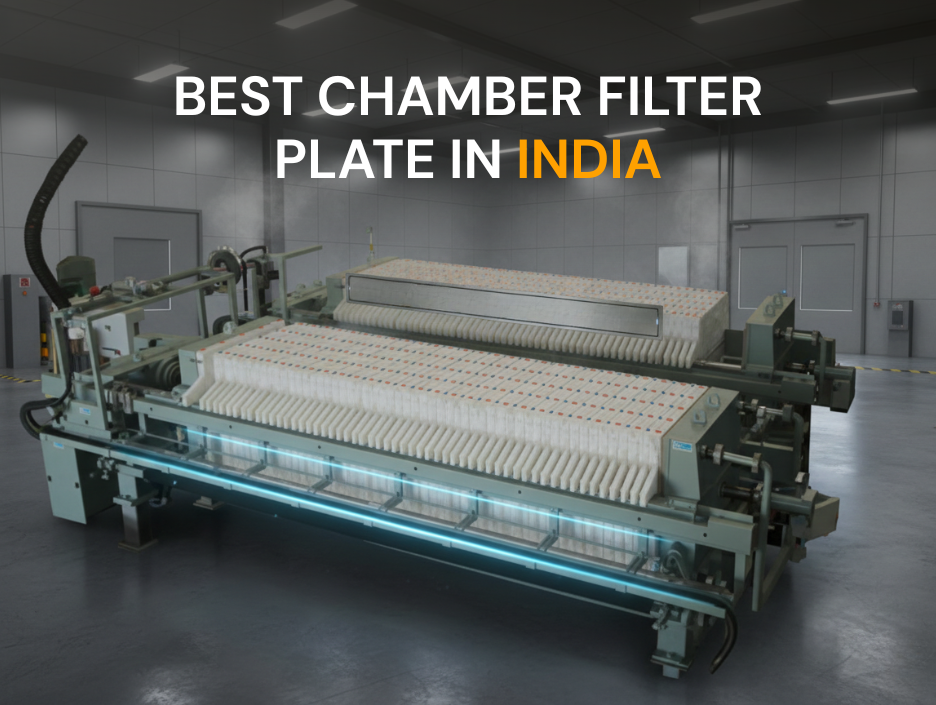
Best Chamber Filter Plate in India: Reliable Solution for Efficient Industrial Filtration
Efficient solid-liquid separation is essential for industries dealing with wastewater, chemicals, pharmaceuticals, ceramics, mining, food processing, pigments, dyes, textiles, paper, and many other industrial processes. At the heart of a filter press system are the filter plates, which directly influence filtration efficiency, cake formation, filtrate quality, cycle time, and overall operating performance.
For businesses searching for the Best Chamber Filter Plate in India, choosing the correct plate requires more than comparing dimensions and prices. Plate material, chamber depth, operating pressure, temperature, chemical compatibility, drainage design, filter cloth, feed arrangement, and the characteristics of the slurry must all be considered.
A well-designed chamber filter plate can help improve filtration performance, produce consistent filter cakes, simplify cake discharge, and support dependable operation of the filter press.
In this guide, we explain what chamber filter plates are, how they work, their major benefits, industrial applications, selection criteria, maintenance requirements, and why choosing an experienced chamber filter plate manufacturer in India is important.
What Is a Chamber Filter Plate?
A chamber filter plate, commonly known as a recessed chamber filter plate, is an important component used in chamber-type filter presses for solid-liquid separation.
Unlike traditional plate-and-frame arrangements that use separate plates and frames, recessed chamber plates contain a recessed area on each plate surface. When two plates are pressed together, these recessed areas form a filtration chamber.
Filter cloth is installed over the plates and acts as the filtration medium.
During filtration, slurry is pumped into the chambers under pressure. The liquid passes through the filter cloth and drainage channels, while suspended solids remain inside the chambers.
As filtration continues, the solids accumulate and form a filter cake. When the filtration cycle is completed, the press is opened and the cake is removed.
The design of the chamber filter plate therefore has a direct impact on the operation and efficiency of the entire filter press.
If you need assistance selecting plates for your filtration process, contact our chamber filter plate experts to discuss your application.
How Does a Chamber Filter Plate Work?
The operation of chamber filter plates is based on pressure filtration. The complete process generally involves several stages.
Plate Closing
Multiple chamber filter plates are installed in sequence inside the filter press.
Before filtration begins, the plates are pushed together using a mechanical, hydraulic, or automated closing mechanism.
When adjacent recessed plates are compressed together, their recessed surfaces create enclosed filtration chambers.
Slurry Feeding
Slurry is pumped into the filter press through the designated feed passage.
The slurry flows into the chambers formed between the plates.
The feed arrangement should distribute slurry effectively across the filter plate pack so that filtration occurs consistently throughout the system.
Solid-Liquid Separation
Filter cloth fitted over each chamber plate retains suspended solid particles while allowing liquid to pass through.
The liquid moves through the plate's drainage channels and leaves the filter press as filtrate.
Cake Formation
As more slurry enters the chamber, retained particles build up on the filter cloth.
The accumulated solids eventually form a filter cake.
Cake formation continues until the chamber is filled or the filtration cycle reaches its designed endpoint.
Cake Discharge
Once filtration is complete, feed pressure is safely released and the filter press is opened.
The plates are separated, allowing the filter cakes to fall or be removed from between them.
The plates can then be inspected or cleaned before the next filtration cycle begins.
Why Are Chamber Filter Plates Important?
The filter plate is much more than a structural component.
Its design influences:
- Filtration area
- Cake volume
- Filtrate drainage
- Slurry distribution
- Operating pressure
- Cake thickness
- Filtration cycle
- Filter cloth support
- Cake discharge
- Equipment reliability
For this reason, selecting the Best Chamber Filter Plate in India should be based on the actual process conditions.
An incorrectly selected plate can contribute to poor cake formation, leakage, slow filtration, uneven filling, increased maintenance, or reduced equipment efficiency.
Major Benefits of Chamber Filter Plates
1. Efficient Solid-Liquid Separation
The primary purpose of chamber filter plates is to create an effective filtration space where solids can be separated from liquids.
When the correct filter cloth and operating parameters are used, chamber plates can help produce clear filtrate and well-formed filter cakes.
This makes chamber filter presses suitable for many industrial filtration and sludge-dewatering processes.
2. Defined Cake Formation
Recessed chamber plates create a fixed chamber volume between adjacent plates.
This enables solids to accumulate within a defined space during filtration.
Consistent chamber geometry can help achieve predictable cake thickness when feed and slurry conditions remain stable.
3. Simple Plate Configuration
Recessed chamber filter presses do not require separate frames between every filter plate in the way traditional plate-and-frame presses do.
This simplifies the plate pack arrangement and makes chamber plates a widely used configuration for modern industrial filter presses.
4. Good Mechanical Strength
High-quality chamber filter plates are engineered to withstand the mechanical forces and filtration pressures associated with their specified operating conditions.
Plate strength depends on material, design, manufacturing quality, plate dimensions, operating temperature, and filtration pressure.
5. Multiple Material Options
Chamber filter plates can be manufactured using different materials depending on the application.
Polypropylene is one of the most common choices because it provides good resistance to many chemicals, relatively low weight, and broad industrial applicability.
Other materials may be selected for specialized operating conditions.
6. Flexible Plate Sizes
Chamber filter plates are available in different dimensions and chamber depths.
This makes them suitable for small, medium, and large filter presses.
The appropriate size depends on required filtration capacity, available installation space, solids concentration, desired cake volume, and production requirements.
7. Easier Cake Handling
A properly designed chamber can encourage uniform cake formation.
When the correct filter cloth is selected and operating conditions are optimized, the cake can often be discharged efficiently after filtration.
Chamber Filter Plate vs Plate-and-Frame Filter Plate
Businesses frequently ask about the difference between chamber filter plates and conventional plate-and-frame systems.
In a traditional plate-and-frame filter press, separate plates and frames are arranged alternately. The frames create the spaces in which the filter cake forms.
A chamber filter press uses recessed plates. Two adjacent recessed plates create the filtration chamber without requiring a separate frame between them.
Chamber filter plates are widely used because they provide a relatively straightforward plate arrangement and are suitable for many sludge-dewatering and industrial filtration applications.
However, the ideal configuration depends on the process.
Some specialized applications may still benefit from plate-and-frame systems, membrane plates, gasketed plates, or other filtration designs.
For application-specific recommendations, speak with Panama Engineering about your filter plate requirements.
Industrial Applications of Chamber Filter Plates
Chamber filter plates are used in a wide range of industries where solid-liquid separation is required.
Effluent Treatment Plants
Effluent Treatment Plants generate sludge during different wastewater-treatment stages.
A chamber filter press can be used to dewater this sludge, reducing the amount of free liquid and producing a filter cake that is easier to handle.
This makes chamber filter plates particularly relevant for industrial ETP applications.
Sewage Treatment Plants
Sludge generated by sewage treatment may also require dewatering before further processing or disposal.
Filter presses equipped with suitable chamber plates can provide pressure-based sludge dewatering.
Chemical Industry
Chemical manufacturing involves numerous filtration operations.
Chamber filter plates may be used for product filtration, intermediate separation, process recovery, or treatment of chemical sludge.
Chemical compatibility between the slurry, filter plate, and filter cloth must always be evaluated.
Ceramic Industry
Ceramic manufacturing frequently involves clay and mineral slurries.
Chamber filter presses can remove water from these slurries and produce cakes suitable for further processing.
Mining and Mineral Processing
Mining processes produce large volumes of mineral-containing slurry.
Filter presses can be used for concentrate dewatering, tailings processing, sludge management, and process-water recovery depending on the overall system design.
Pigment and Dye Manufacturing
Pigment and dye industries often require solid-liquid separation during production.
The filtration system can also be used for dewatering sludge generated during wastewater treatment.
Textile Industry
Textile processing and dyeing operations generate industrial effluent that may require extensive treatment.
A chamber filter press can help dewater treatment sludge as part of the overall ETP process.
Paper and Pulp Industry
Paper manufacturing produces process streams and wastewater containing suspended solids.
Filter press systems can be used in appropriate stages for sludge dewatering and solids separation.
Food Processing
Certain food-processing applications can use filter presses for separation or clarification processes.
For product-contact applications, suitable hygienic materials and applicable food-processing standards must be considered when selecting plates and associated components.
Marble and Stone Processing
Stone cutting and polishing can generate wastewater containing fine particles.
Chamber filter presses can help separate stone solids from process water and produce a manageable sludge cake.
Polypropylene Chamber Filter Plates
Polypropylene, commonly abbreviated as PP, is one of the most widely used materials for modern chamber filter plates.
PP chamber filter plates offer several practical characteristics, including:
- Resistance to many chemicals
- Relatively low weight
- Good mechanical performance within designed operating limits
- Resistance to moisture
- Easy handling compared with heavier metallic plates
- Broad industrial applicability
- Suitability for many wastewater-treatment processes
However, polypropylene has defined temperature and pressure limits. The exact operating range depends on the plate design, material grade, dimensions, and manufacturer specifications.
Always verify the required conditions before selecting PP chamber filter plates.
How to Choose the Best Chamber Filter Plate in India
The right chamber filter plate should be selected according to actual operating conditions.
Determine the Correct Plate Size
Filter plate dimensions affect filtration area and overall machine capacity.
The plate size should match the filter press and the required production throughput.
Select the Right Chamber Depth
Chamber depth determines the volume available for filter cake formation.
Different cake thicknesses may be suitable for different types of slurry.
Check Chemical Compatibility
The plate material must be compatible with the slurry.
Consider acidity, alkalinity, solvents, oils, chemicals, and other process substances.
Consider Operating Temperature
Temperature can significantly influence filter plate performance.
Make sure the selected plate material and design are rated for the process temperature.
Evaluate Operating Pressure
Never operate a filter plate above its specified pressure limit.
The manufacturer should recommend a plate suitable for the designed filtration pressure.
Select the Correct Filter Cloth
Even the Best Chamber Filter Plate in India cannot provide optimum performance if paired with an unsuitable filter cloth.
Cloth selection should consider particle size, slurry viscosity, temperature, chemical compatibility, filtrate clarity, and cake-release properties.
Features to Look for in High-Quality Chamber Filter Plates
When comparing chamber filter plate manufacturers in India, consider important design and quality characteristics.
Accurate Plate Dimensions
Consistent dimensions help plates align correctly within the filter press.
Effective Sealing Surface
The sealing area should be properly manufactured to reduce the risk of leakage during filtration.
Optimized Drainage Channels
Drainage design helps filtrate flow efficiently from the filtration surface toward the outlet.
Uniform Chamber Design
Consistent chamber geometry helps support predictable cake formation and filtration performance.
Proper Filter Cloth Support
Plate surfaces should adequately support filter cloth during operation.
Reliable Feed Arrangement
The feed port and internal distribution system should allow slurry to enter the chambers efficiently.
Manufacturing Quality
Material quality, molding or fabrication accuracy, inspection, and quality control can influence plate life and filtration reliability.
Choosing a Chamber Filter Plate Manufacturer in India
A filter plate should not be treated as a generic replacement component.
Its dimensions, feed configuration, port arrangement, chamber depth, sealing surface, material, and drainage design must match the filter press and process.
When selecting a manufacturer, consider:
- Experience in industrial filtration
- Available plate sizes
- Material options
- Customization capabilities
- Technical guidance
- Quality control
- Replacement plate availability
- Filter cloth support
- Understanding of industrial applications
- After-sales assistance
An experienced manufacturer can evaluate your existing filter press or new filtration requirements and recommend suitable chamber plates.
If you need new or replacement plates, request a chamber filter plate consultation with your filter press specifications.
Replacement Chamber Filter Plates
Filter plates are designed for long-term industrial use, but they can eventually require replacement due to wear, accidental damage, chemical attack, excessive operating conditions, or changes in the filtration process.
Before ordering replacement plates, collect accurate details about your existing plate.
These may include:
- Plate length and width
- Overall thickness
- Chamber depth
- Feed-hole diameter
- Feed-hole position
- Filtrate port arrangement
- Handle dimensions
- Plate material
- Operating pressure
- Operating temperature
- Filter press model
- Required quantity
Photographs, drawings, and samples can also help a manufacturer identify the correct replacement configuration.
Maintenance Tips for Chamber Filter Plates
Regular maintenance can help extend plate life and improve filter press reliability.
Clean Plate Surfaces
Remove accumulated solids from plate surfaces, feed holes, and drainage channels.
Inspect for Damage
Look for cracks, deformation, excessive wear, damaged sealing surfaces, or blocked drainage passages.
Check Plate Alignment
Incorrect plate alignment can contribute to leakage or mechanical damage.
Maintain Filter Cloth
Dirty, blocked, torn, or incorrectly fitted filter cloth can negatively affect filtration.
Follow Pressure Limits
Never exceed the recommended operating pressure.
Avoid Improper Handling
Plates should be handled according to manufacturer instructions, especially during maintenance or replacement.
Frequently Asked Questions
What is a chamber filter plate?
A chamber filter plate is a recessed filter plate used in a filter press. Two adjacent recessed plates create a chamber where slurry is filtered and solid particles accumulate to form a filter cake.
Where are chamber filter plates used?
They are commonly used in wastewater treatment, chemicals, ceramics, textiles, mining, pigments, paper, stone processing, and other industries requiring solid-liquid separation.
Which material is best for chamber filter plates?
Polypropylene is widely used because of its chemical resistance and relatively low weight. However, the best material depends on slurry chemistry, pressure, temperature, and process requirements.
How do I select chamber filter plate size?
Plate size should be selected according to the filter press design, required filtration area, slurry volume, solids concentration, cake volume, and production capacity.
Can I replace existing chamber filter plates?
Yes. Replacement plates can be supplied when accurate dimensions, port arrangements, material specifications, and operating conditions are available.
What is the difference between a chamber plate and a membrane plate?
A chamber plate has a fixed recessed filtration chamber. A membrane plate incorporates a flexible membrane that can apply additional pressure to the cake after initial filtration, potentially improving cake dewatering in suitable applications.
Why Consider Panama Engineering for Chamber Filter Plates?
Choosing the Best Chamber Filter Plate in India requires a combination of suitable material, precise manufacturing, appropriate chamber design, and compatibility with the filter press.
Panama Engineering provides filter presses, filter plates, filter cloths, and related filtration equipment for industrial solid-liquid separation applications.
Whether you are installing a new filter press, increasing filtration capacity, replacing damaged plates, or improving an existing filtration process, selecting the correct filter plate specification is critical.
The plate should be selected according to slurry characteristics, operating pressure, temperature, required cake volume, chemical compatibility, and the design of the existing filter press.
Conclusion
The Best Chamber Filter Plate in India is one that provides the right balance of filtration efficiency, mechanical performance, chemical compatibility, cake capacity, durability, and compatibility with your filter press.
High-quality chamber filter plates can support efficient solid-liquid separation, consistent cake formation, effective filtrate drainage, and dependable filter press operation across industries such as wastewater treatment, chemicals, ceramics, textiles, mining, pigments, paper, food processing, and stone processing.
Before selecting or replacing chamber filter plates, carefully evaluate plate dimensions, chamber depth, material, feed-hole arrangement, operating pressure, temperature, filter cloth, and slurry characteristics.
Rather than selecting plates based only on price, consider their long-term compatibility with your process and filtration equipment.
For new filter plates, replacement plates, customized configurations, or technical guidance, contact Panama Engineering for chamber filter plates and share your filter press specifications and application requirements.
Chamber Filter Plate Selection
Review our chamber filter plate page and compare the full filter press plate range before selecting a plate for your process.
Explore Filter Press Solutions
Continue your research with our filter press machines, filter press plates and technical enquiry pages.
Send Your Requirement