
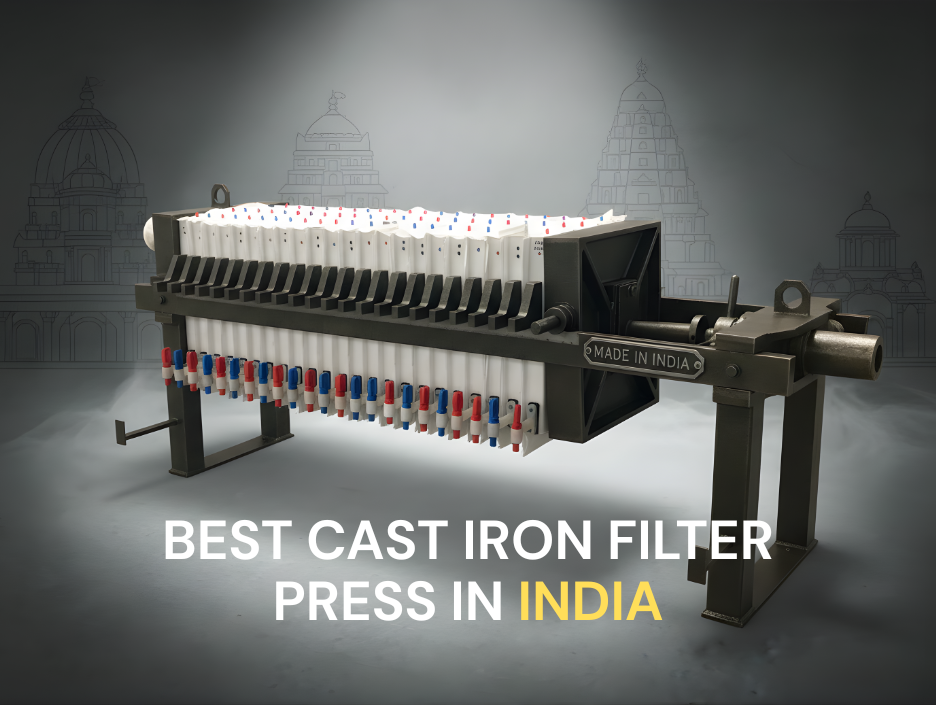
Best Cast Iron Filter Press in India: Heavy-Duty Industrial Filtration Solution
Industrial filtration plays a crucial role in manufacturing, chemical processing, wastewater treatment, edible oil processing, pharmaceuticals, mining, ceramics, and many other process industries. When an application requires a robust filtration system capable of operating in demanding conditions, a Cast Iron Filter Press can be an effective solid-liquid separation solution.
If you are searching for the Best Cast Iron Filter Press in India, choosing a machine solely based on price is rarely the right approach. Plate quality, operating pressure, filtration area, slurry characteristics, frame construction, filter cloth, hydraulic or mechanical closing arrangement, maintenance requirements, and manufacturer support all contribute to long-term performance.
A properly selected cast iron filter press can provide reliable filtration, efficient cake formation, improved filtrate recovery, and durable operation in suitable industrial environments.
This guide explains what a cast iron filter press is, how it works, its benefits, applications, important features, and what to consider when selecting the right filter press manufacturer in India.
What Is a Cast Iron Filter Press?
A Cast Iron Filter Press is an industrial filtration machine that uses cast iron filter plates as part of its filtration arrangement. The equipment separates suspended solids from liquid slurry using pressure filtration.
Filter plates are arranged inside a heavy-duty frame and covered with appropriate filter media or filter cloth. When the plates are closed together, they create filtration chambers.
Slurry is pumped into the filter press under controlled pressure. The liquid portion passes through the filter cloth and plate drainage system, while solid particles are retained inside the chambers.
As filtration continues, the accumulated solids gradually form a filter cake.
After the filtration cycle is complete, the pressure is released, the filter press is opened, and the cake is discharged.
Cast iron filter plates are selected for applications where their mechanical strength, operating characteristics, temperature suitability, and compatibility with the process make them an appropriate choice.
If you are unsure whether cast iron plates are suitable for your process, contact our filter press experts for assistance with your application requirements.
How Does a Cast Iron Filter Press Work?
The working principle of a cast iron filter press is based on pressure filtration. While the exact operating cycle can differ depending on machine configuration and application, the general process includes the following stages.
1. Closing the Filter Plates
The filtration cycle begins by bringing all filter plates together and applying sufficient closing force.
The closing mechanism may be manual, mechanical, hydraulic, or automated depending on the filter press configuration.
Proper plate closing is essential because the plates must remain securely positioned while slurry is pumped into the chambers.
2. Feeding the Slurry
Once the filter press is closed, slurry is pumped through the central or designated feed passage.
The slurry then distributes into the filtration chambers formed between the plates.
Feed pressure should be controlled according to the filter press design, slurry characteristics, filter cloth, and required filtration results.
3. Filtration
The filter cloth acts as the filtration medium.
Liquid passes through the cloth while suspended solids remain inside the chamber. The filtered liquid, commonly known as filtrate, travels through the drainage passages and exits the filter press.
4. Cake Formation
As more slurry enters the chambers, the retained solids build up on the filter cloth.
Eventually, the chambers fill with compacted solids, forming the filter cake.
Cake properties depend on several variables, including:
- Particle size
- Slurry concentration
- Feed pressure
- Filtration time
- Filter cloth selection
- Plate configuration
- Temperature
- Chemical composition of the slurry
5. Cake Discharge
After filtration is complete, the feed pump is stopped and pressure is safely released.
The plates are then separated so that the filter cake can be discharged.
The equipment can subsequently be prepared for the next filtration cycle.
Why Choose a Cast Iron Filter Press?
Different industrial processes require different filter plate materials. Polypropylene plates are widely used because of their chemical resistance and relatively low weight, while stainless steel and other specialized materials may be required for particular applications.
Cast iron filter presses remain relevant where their specific mechanical and thermal characteristics match the operating process.
Some of their key advantages include strength, rigidity, durability, and suitability for selected heavy-duty filtration environments.
The correct plate material should always be chosen after considering process conditions rather than assuming that one material is ideal for every industry.
Benefits of Cast Iron Filter Presses
1. Heavy-Duty Construction
One of the most notable characteristics of a cast iron filter press is its robust construction.
Industrial filtration equipment can be exposed to substantial mechanical forces during operation. Properly manufactured cast iron components offer the strength and rigidity required for suitable heavy-duty applications.
This makes cast iron filter presses an option worth considering for plants where equipment durability is an important purchasing factor.
2. Long Operational Life
Industrial machinery represents a significant investment, making equipment life an important consideration.
With correct operation, suitable process conditions, routine inspection, and preventive maintenance, a well-built cast iron filter press can provide long-term service.
Actual equipment life depends on factors such as slurry chemistry, temperature, pressure, filtration frequency, maintenance practices, and operating environment.
3. Effective Solid-Liquid Separation
The primary function of any filter press is efficient solid-liquid separation.
A properly configured cast iron filter press can produce clear filtrate while retaining suspended solids in the filtration chambers.
This can help industries recover process liquids, separate valuable solids, dewater sludge, or prepare materials for subsequent processing.
4. Efficient Filter Cake Formation
Pressure filtration encourages solids to accumulate and compact inside the chambers.
This can produce a relatively manageable filter cake compared with untreated liquid sludge.
A well-formed cake may be easier to transport, dispose of, recycle, recover, or process further depending on the industrial application.
5. Suitable for Demanding Industrial Applications
Cast iron filter presses can be appropriate for selected processes where operating conditions demand strong and rigid filtration equipment.
However, suitability must always be evaluated according to slurry chemistry and process temperature because cast iron is not appropriate for every corrosive environment.
6. Multiple Configuration Options
Cast iron filter presses can be designed in different capacities and configurations.
Manufacturers can evaluate required filtration area, plate dimensions, chamber arrangement, feed system, filter cloth, closing mechanism, pumps, and accessories according to the customer's process.
This makes it possible to design filtration equipment around the actual application rather than using a one-size-fits-all approach.
Applications of Cast Iron Filter Presses
The Best Cast Iron Filter Press in India should be selected according to the industrial application in which it will operate.
Pressure filtration technology is used across many industries, including the following.
Edible Oil Industry
Filter presses have traditionally been used in oil-processing applications where solids need to be separated from liquid.
A properly selected filter press can help remove suspended impurities and assist in achieving the desired filtration results.
Process temperature, oil characteristics, filtration requirements, and hygiene standards should be evaluated before selecting plate material.
Chemical Industry
Chemical manufacturing frequently requires separation of solids from process liquids.
Filter presses can be used for product recovery, intermediate filtration, wastewater treatment, and other separation operations.
Chemical compatibility is particularly important. Cast iron should only be used when it is compatible with the material being processed.
Ceramic Industry
Ceramic production often involves slurry preparation and moisture removal.
Filter presses can help remove water from ceramic slurry and produce filter cake for further processing.
Mining and Mineral Processing
Mining and mineral-processing operations frequently handle slurries containing significant quantities of suspended solids.
Pressure filtration may be used for concentrate dewatering, tailings management, process-water recovery, or other solid-liquid separation applications.
Wastewater and Effluent Treatment
Industrial wastewater treatment processes often generate sludge that requires dewatering.
A filter press can reduce the amount of free liquid in sludge, creating a cake that can be easier to handle and transport.
Pigment and Dye Industry
Pigment and dye production may involve filtration during manufacturing as well as sludge dewatering during wastewater treatment.
The appropriate filter plate material should be selected according to process chemistry.
Pharmaceutical and Process Industries
Filter press technology can also be applied to selected pharmaceutical and specialty process applications. However, equipment materials, hygiene requirements, product-contact surfaces, and applicable regulatory standards must be carefully considered.
Cast Iron Filter Press vs Polypropylene Filter Press
One common question is whether a business should choose a cast iron or polypropylene filter press.
There is no universal answer because both materials have different characteristics.
Cast iron is known for strength, rigidity, and suitability for certain operating environments. Polypropylene is lightweight and offers excellent resistance to many chemicals, making it widely used in wastewater, chemical, pharmaceutical, food-processing, and other applications.
The decision should be based on factors such as:
- Slurry composition
- Chemical compatibility
- Operating temperature
- Operating pressure
- Plate dimensions
- Required filtration area
- Filtration frequency
- Equipment weight
- Maintenance requirements
- Desired equipment life
- Initial and long-term costs
For a professional recommendation based on your process, you can discuss your filtration requirements with Panama Engineering.
Important Features of the Best Cast Iron Filter Press in India
When comparing filter press manufacturers, buyers should examine the complete equipment specification.
High-Quality Filter Plates
Filter plates are central to filtration performance.
Plate design, dimensions, drainage arrangement, surface quality, and manufacturing accuracy can affect cake formation, filtrate flow, sealing, and overall machine operation.
Strong Filter Press Frame
The structural frame must withstand the closing and filtration forces generated during operation.
A properly engineered frame provides the mechanical stability required to keep the plate pack securely closed throughout the filtration cycle.
Reliable Closing Mechanism
Depending on the filter press, plate closing may be performed manually, mechanically, hydraulically, or automatically.
For larger industrial systems, hydraulic closing can help simplify operation and provide controlled closing force.
Suitable Filter Cloth
Choosing the right filter cloth is just as important as choosing the filter plates.
Filter cloth selection depends on:
- Particle size
- Slurry viscosity
- Chemical composition
- Temperature
- Filtration pressure
- Required filtrate clarity
- Cake-release characteristics
An incorrect cloth can reduce filtration rate or negatively affect filtrate quality and cake discharge.
Efficient Slurry Feeding
A suitable feed pump should provide the required flow and pressure characteristics for the filtration process.
Pump selection should therefore be coordinated with the filter press design and process requirements.
Safety Features
Industrial filter presses operate under pressure, so safety should always be considered during equipment design and operation.
Operators should receive appropriate training and follow manufacturer-recommended operating procedures, especially when opening the press, maintaining hydraulic systems, cleaning plates, and handling filter cakes.
How to Choose the Best Cast Iron Filter Press Manufacturer in India
Purchasing a filter press is generally a long-term industrial investment. Therefore, selecting a reliable manufacturer is important.
Before placing an order, evaluate several factors.
Manufacturing Experience
Experience in filtration engineering can help a manufacturer understand different slurry characteristics and recommend an appropriate configuration.
Customization Capability
Every industrial filtration process is different.
A good manufacturer should be able to evaluate the customer's process and recommend suitable plate dimensions, filtration area, cloth, pump, closing arrangement, and automation.
Technical Support
Technical consultation can be valuable during equipment selection, installation, commissioning, operation, and troubleshooting.
Availability of Spare Parts
Filter cloths, seals, hydraulic components, pumps, and other wear parts may require replacement over the operating life of the machine.
Reliable access to spare parts can help minimize downtime.
Application-Based Selection
Avoid selecting a filter press based only on plate size or price.
A technically appropriate machine should be selected after evaluating actual process conditions.
To determine which configuration suits your application, request a cast iron filter press consultation and provide your slurry and capacity requirements.
Information to Provide Before Buying a Cast Iron Filter Press
Providing detailed process information allows a manufacturer to recommend a more appropriate filtration solution.
Before requesting a quotation, prepare information about:
- Material or slurry being filtered
- Chemical composition
- Slurry quantity per batch or per hour
- Percentage of solids
- Particle size
- Operating temperature
- Required feed pressure
- Desired filtrate quality
- Expected cake moisture
- Number of filtration cycles per day
- Available installation space
- Required filtration area
- Existing feed pump
- Required automation level
- Preferred plate size
- Utility availability
If some of this information is unavailable, a filtration specialist may recommend laboratory testing or a trial based on representative slurry samples.
Maintenance Tips for Cast Iron Filter Presses
Preventive maintenance can improve equipment reliability and reduce unexpected downtime.
Inspect Filter Plates Regularly
Check the plates for damage, excessive wear, corrosion, sealing issues, and alignment problems.
Keep Filter Cloth Clean
Blocked filter cloth can reduce filtration efficiency.
Cleaning frequency should depend on the slurry, operating schedule, and cloth characteristics.
Inspect the Hydraulic System
For hydraulic filter presses, regularly inspect oil level, cylinders, hoses, fittings, seals, and hydraulic pressure.
Monitor Feed Pressure
Operating the filter press outside its specified pressure range can damage equipment and compromise safety.
Always follow the manufacturer's operating limits.
Check the Structural Frame
Periodically inspect the frame, side bars, head plates, fasteners, and other structural components.
Maintain the Feed Pump
The pump is an important part of the filtration system. Regular inspection and maintenance can help maintain stable feed conditions and reduce downtime.
Why Choose Panama Engineering for Cast Iron Filter Presses?
Choosing an experienced filtration-equipment manufacturer can help businesses obtain a machine designed around their actual process requirements.
Panama Engineering provides industrial filter presses and filtration solutions for various solid-liquid separation applications. Businesses can discuss plate materials, machine capacity, filtration area, filter cloth, hydraulic systems, pumps, automation, and other requirements according to their process.
Rather than choosing filtration equipment solely from a standard specification, industries can benefit from evaluating the entire process—including the material being filtered, desired output, operating conditions, and future production needs.
Whether you require a cast iron filter press for oil processing, chemicals, ceramics, wastewater treatment, pigments, mining, or another suitable industrial application, proper engineering and equipment selection are essential for dependable performance.
Frequently Asked Questions About Cast Iron Filter Presses
What is a cast iron filter press?
A cast iron filter press is a pressure-filtration machine that uses cast iron filter plates to separate suspended solids from liquids. Slurry enters chambers between the plates, liquid passes through the filter media, and solids accumulate to form a filter cake.
What is a cast iron filter press used for?
Cast iron filter presses may be used in suitable applications involving oils, chemicals, ceramics, minerals, pigments, industrial processing, and wastewater treatment. The exact suitability depends on slurry chemistry, temperature, pressure, and filtration requirements.
What are the benefits of a cast iron filter press?
Key advantages can include strong construction, mechanical rigidity, reliable pressure filtration, effective cake formation, and long operating life when the equipment is correctly selected, operated, and maintained.
Is cast iron better than polypropylene for filter press plates?
Neither material is universally better. Cast iron offers particular mechanical characteristics, while polypropylene provides excellent chemical resistance and lower weight. Selection should be based on process requirements.
How do I select the correct filter press size?
The required filter press size depends on slurry volume, solids concentration, desired cake volume, cycle time, operating hours, filtration area, and future production requirements.
Can a cast iron filter press be customized?
Yes. Depending on the manufacturer and application, the filter press can be customized for plate size, filtration area, frame design, filter cloth, hydraulic system, pump, controls, and other process requirements.
Conclusion
Selecting the Best Cast Iron Filter Press in India requires careful evaluation of your filtration process rather than simply comparing machine prices.
A properly engineered cast iron filter press can provide robust construction, efficient solid-liquid separation, effective cake formation, reliable operation, and long-term value for suitable industrial applications.
Before purchasing a system, evaluate the slurry composition, chemical compatibility, temperature, operating pressure, filtration capacity, plate size, filter cloth, closing mechanism, maintenance requirements, and desired level of automation.
Most importantly, work with a filter press manufacturer capable of understanding your process and recommending equipment based on real operating conditions.
If you are planning to install a new filtration system or replace existing equipment, contact Panama Engineering for a cast iron filter press to discuss your capacity, slurry characteristics, plate requirements, and filtration objectives.
Cast Iron Filter Press Selection
Selection should be based on the actual process and operating requirement. Explore the existing cast iron filter press information or contact Panama Engineering.
Explore Filter Press Solutions
Continue your research with our filter press machines, filter press plates and technical enquiry pages.
Send Your Requirement