
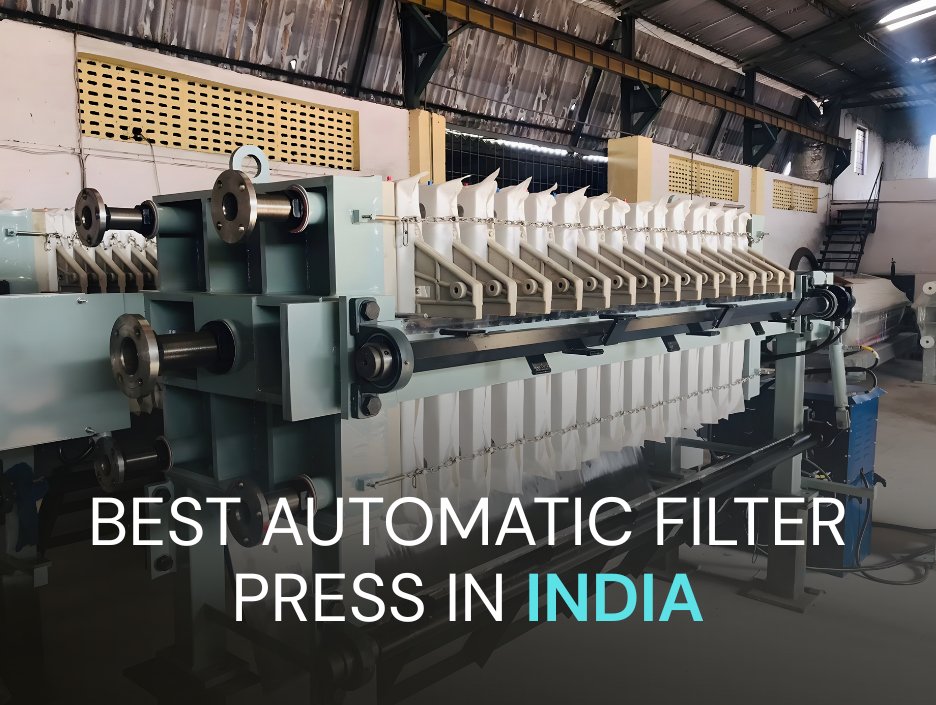
Best Automatic Filter Press in India: Advanced Industrial Filtration Solutions
Industrial filtration is an essential part of many manufacturing and wastewater treatment processes. Industries need reliable filtration equipment to separate solids from liquids, reduce sludge volume, recover valuable materials, improve process efficiency, and simplify waste handling. When businesses require higher productivity with less manual intervention, an automatic filter press can be an effective solution.
If you are searching for the Best Automatic Filter Press in India, it is important to look beyond the initial equipment cost. Filtration capacity, automation level, construction quality, filter plate configuration, operating pressure, maintenance requirements, safety, and after-sales support can all influence the long-term value of the equipment.
Panama Engineering has extensive experience in filter press manufacturing and supplies filtration equipment for a variety of industrial applications. Its product portfolio includes automatic, semi-automatic, membrane, hydraulic, and manual filter presses, along with filter plates, cloths, accessories, and customized filtration solutions.
This guide explains what an automatic filter press is, how it works, its advantages, common applications, and the factors industries should consider when selecting the right system.
What Is an Automatic Filter Press?
An automatic filter press is an industrial solid-liquid separation system designed to automate several stages of the filtration cycle.
A conventional filter press generally consists of multiple filter plates arranged inside a strong structural frame. Filter cloth is fitted to the plates, creating chambers in which solids are captured. Slurry is pumped into these chambers under pressure. Liquid passes through the filter media and exits as filtrate, while solid particles remain inside the chambers and gradually form a filter cake.
In an automatic system, various operations can be automated depending on the machine configuration. These may include:
- Hydraulic plate closing and opening
- Filtration cycle control
- Automatic plate shifting
- Filter cake discharge assistance
- Drip collection
- Cloth washing
- Process monitoring
- Pressure control
- Safety interlocking
- Integration with pumps and control panels
The exact automation package should be selected according to the characteristics of the slurry, desired production capacity, filtration objectives, plant layout, and operational requirements.
How Does an Automatic Filter Press Work?
Although specific configurations vary, an automatic filter press normally follows a systematic filtration cycle.
1. Plate Closing
At the beginning of the process, filter plates are arranged together and compressed using the closing mechanism. Proper plate closure creates the filtration chambers and helps maintain the required sealing pressure.
2. Slurry Feeding
The prepared slurry is pumped into the filter press. It flows through the feed passage and enters the chambers between the filter plates.
The feed pressure and flow rate should be controlled according to the application and filter press design.
3. Solid-Liquid Separation
As slurry enters the chambers, the filter cloth allows the liquid portion to pass through while retaining suspended solid particles.
The separated liquid, known as filtrate, travels through the plate drainage channels and exits the machine.
4. Filter Cake Formation
As filtration continues, retained solids accumulate on the filter cloth and gradually form a filter cake.
Cake thickness, moisture level, filtration time, and final cake characteristics depend on several factors, including the slurry composition, particle size, filter cloth, feed pressure, plate design, and filtration cycle.
5. Plate Opening and Cake Discharge
After the filtration cycle is completed and pressure is safely released, the plates can be opened. Depending on the level of automation, an automatic plate-shifting system can move the plates sequentially to facilitate cake discharge.
6. Preparation for the Next Cycle
After cake removal, the machine is prepared for another filtration cycle. Certain systems can also incorporate filter cloth washing or other automated cleaning features.
By automating repetitive operations, businesses can improve cycle consistency and reduce dependence on manual handling.
Why Choose the Best Automatic Filter Press in India?
Industrial filtration equipment often operates for many hours under demanding conditions. Selecting the right machine can therefore affect productivity, operating costs, manpower requirements, waste management, and process consistency.
The Best Automatic Filter Press in India for a particular facility is not necessarily the largest or most expensive model. It is the machine correctly engineered for the process conditions and filtration objectives.
Businesses should evaluate slurry characteristics, solids concentration, required throughput, desired cake dryness, chemical compatibility, available space, automation requirements, and future capacity before making a decision.
For assistance in identifying a suitable configuration, you can contact our filter press experts and discuss your application requirements.
Major Benefits of an Automatic Filter Press
Reduced Manual Intervention
One of the primary reasons industries move toward automatic filtration systems is to reduce repetitive manual operations.
Automated plate movement, hydraulic operation, process controls, and optional washing systems can reduce operator involvement compared with more manually operated configurations.
This can be especially useful for plants that perform multiple filtration cycles every day.
Improved Operational Consistency
Manual operations may vary depending on the operator, working conditions, and production schedule.
Automation makes it easier to follow a repeatable operating sequence. Consistent cycle control can help industries achieve more predictable filtration performance when other process variables remain stable.
Higher Productivity
Reducing the time required for plate handling and other repetitive operations can shorten non-filtration portions of the cycle.
For facilities processing substantial volumes of slurry, even relatively small reductions in cycle time can contribute to improved overall throughput.
Efficient Sludge Dewatering
Filter presses are widely used for sludge dewatering because they can separate suspended solids from liquid and produce a filter cake that is easier to handle than untreated slurry.
Reducing the liquid content of sludge can also reduce the volume of material requiring transportation, disposal, recycling, or further treatment.
Better Working Environment
Automating suitable filtration operations can reduce the amount of direct operator interaction with filter plates and wet sludge.
The actual benefits depend on the equipment configuration, plant design, operating procedures, and safety controls.
Potential Long-Term Cost Savings
Automatic filter presses may require a higher initial investment than simpler manual systems. However, the potential benefits from reduced manual handling, higher throughput, consistent operation, and optimized filtration cycles can improve the overall economics of the filtration process.
A proper life-cycle cost analysis should consider equipment cost, energy consumption, maintenance, consumables, manpower, production capacity, downtime, and expected service life.
Industries That Use Automatic Filter Presses
Filter press technology is used across many industries where solid-liquid separation is necessary.
Panama Engineering states that its filtration equipment serves sectors including paper, sugar, ceramics, marble processing, textiles, wastewater, starch, chemicals, pigments, dyes, steel, and steel rolling mills.
Wastewater and Effluent Treatment
Industrial wastewater may contain suspended solids that need to be separated before disposal, reuse, or further treatment.
An automatic filter press can be incorporated into an Effluent Treatment Plant (ETP) or wastewater treatment process for sludge dewatering.
Chemical Industry
Chemical manufacturing processes frequently require separation of solid particles from process liquids.
Because chemical compatibility is important, filter plate, cloth, piping, and other wetted-component materials must be selected according to the chemical characteristics of the slurry.
Ceramic Industry
Ceramic manufacturing involves slurry processing where filtration and moisture control can be important production steps.
Filter presses can help separate water from ceramic slurry and produce a manageable filter cake.
Marble and Stone Processing
Cutting, grinding, and polishing stone can generate wastewater containing fine suspended particles.
A filter press can separate these solids from process water, supporting sludge handling and potentially assisting water recovery strategies where the overall treatment system permits reuse.
Textile and Dye Industry
Textile manufacturing and dyeing processes can generate wastewater containing colorants and suspended matter.
Filter presses may be used as part of a broader treatment process to dewater sludge produced by wastewater treatment.
Pigment Industry
Pigment production often requires controlled solid-liquid separation. Filter press systems can be designed according to the characteristics of the pigment slurry and required final product.
Paper Industry
Paper and pulp operations generate different process streams and treatment sludge. Filter presses can be used where pressure filtration and sludge dewatering are appropriate.
Steel and Metal Processing
Steel processing and related industrial operations can generate wastewater and sludge containing suspended solids. Properly selected filtration equipment can help manage these streams efficiently.
Important Features to Consider in an Automatic Filter Press
When comparing automatic filter press manufacturers in India, businesses should evaluate the complete system rather than focusing on one specification.
Strong Structural Design
The frame must withstand the forces generated during the filtration cycle. Reliable fabrication, appropriate materials, and sound engineering are therefore essential.
Quality Filter Plates
Filter plates are among the most important components of a filter press.
Different processes may require recessed chamber plates, membrane plates, gasketed plates, plate-and-frame configurations, or plates manufactured from specific materials.
Panama Engineering lists filtering-element material options including polypropylene (PP), cast iron (CI), stainless steel (SS), mild steel (MS), and special alloys for different requirements.
Hydraulic Closing System
A properly designed hydraulic system helps maintain the required closing force during filtration.
Hydraulic cylinders, power packs, controls, and associated components should be selected for dependable operation and ease of maintenance.
Automatic Plate Shifting
Automatic plate shifting can significantly reduce manual effort during cake discharge.
This feature becomes particularly valuable in larger machines containing many filter plates or in facilities performing frequent filtration cycles.
Control Panel
The control system coordinates the machine's automated operations.
Depending on the configuration, controls can manage plate movement, pumps, valves, hydraulic functions, cycle timing, pressure monitoring, safety interlocks, and auxiliary equipment.
Filter Cloth Selection
Filter cloth directly influences filtrate clarity, filtration rate, cake release, and overall process efficiency.
Cloth selection should consider particle size, slurry chemistry, operating temperature, required filtrate quality, cake characteristics, and cleaning requirements.
Automatic Filter Press vs Manual Filter Press
Both automatic and manual filter presses work on similar pressure-filtration principles. The key difference is the amount of operator involvement.
A manual filter press can be suitable for smaller installations, lower production volumes, less frequent cycles, or facilities where capital cost is a major consideration.
An automatic filter press is generally more attractive for applications involving higher throughput, frequent filtration cycles, larger machines, and a need to reduce manual plate handling.
Therefore, businesses should not automatically assume that one type is suitable for every application.
The correct choice depends on production requirements, operating schedule, labor availability, maintenance capabilities, available budget, and the characteristics of the material being filtered.
Why Consider Panama Engineering for Automatic Filter Press Requirements?
Panama Engineering describes itself as an experienced Indian manufacturer and supplier of filter presses and associated equipment. The company states that it has more than five decades of experience in manufacturing and supplying filter presses and provides manual, semi-automatic, and fully automated systems for different requirements.
Its portfolio includes filter press systems, plates, filter cloths, pumps, hydraulic components, control panels, cake collection equipment, cloth washing solutions, and other accessories. The company also highlights made-to-order sludge dewatering solutions for process industries.
These capabilities can be useful for businesses looking for a filtration system designed around specific operating requirements rather than simply purchasing standard equipment.
If you have an upcoming filtration project, speak with Panama Engineering to discuss slurry characteristics, required capacity, automation, and other technical requirements.
How to Select the Best Automatic Filter Press in India
Before requesting a quotation, prepare detailed information about your process.
Important factors include:
- Type of slurry
- Chemical composition
- Solids concentration
- Particle characteristics
- Required processing capacity
- Operating hours per day
- Desired cake moisture
- Required filtrate quality
- Feed pressure
- Slurry temperature
- Required plate size
- Filter cloth requirements
- Available installation space
- Required level of automation
- Material compatibility
- Cleaning requirements
- Existing pumps and process equipment
- Future capacity expansion
Providing accurate process information helps the manufacturer recommend a more suitable filter press.
Instead of selecting equipment based solely on price, evaluate total operating value. A lower-priced machine that requires excessive manpower, maintenance, or downtime can become more expensive over its operating life.
Importance of Customized Filter Press Solutions
Industrial filtration applications differ considerably.
A chemical-processing plant may require corrosion-resistant materials. A wastewater treatment facility may prioritize sludge-volume reduction. A ceramic manufacturer may focus on cake characteristics and production throughput. A pigment producer may require specific filtrate clarity or cake recovery.
For this reason, customization can be an important factor when choosing the Best Automatic Filter Press in India.
Panama Engineering states that it offers personalized and made-to-order sludge dewatering solutions according to user-specific process requirements.
For a customized recommendation, request an automatic filter press consultation with details of your industrial application.
Maintenance of an Automatic Filter Press
Regular preventive maintenance is important for reliable filtration performance and equipment life.
Operators should routinely inspect filter cloth condition, plate alignment, hydraulic components, seals, pumps, piping, electrical connections, sensors, plate-shifting mechanisms, and safety systems.
Filter cloth should be cleaned or replaced when required because blocked or damaged cloth can affect filtration performance.
Filter plates should also be inspected for physical damage, deformation, excessive wear, or sealing problems.
Hydraulic oil levels and hydraulic-system condition should be monitored according to the manufacturer's maintenance recommendations.
A documented preventive maintenance schedule can help reduce unexpected downtime and support more reliable filtration cycles.
Frequently Asked Questions About Automatic Filter Presses
What is an automatic filter press?
An automatic filter press is a pressure-filtration machine designed to separate solids from liquids while automating selected operations such as hydraulic closing, plate opening, plate shifting, cycle control, and other functions depending on the machine configuration.
What is an automatic filter press used for?
Automatic filter presses are used for industrial solid-liquid separation and sludge dewatering. Applications can include wastewater treatment, chemicals, ceramics, pigments, textiles, paper, stone processing, and other process industries.
What are the main advantages of an automatic filter press?
Major advantages can include reduced manual handling, more consistent operating cycles, improved productivity, efficient sludge dewatering, easier cake handling, and greater suitability for frequent industrial filtration cycles.
Which filter press is best for an ETP?
The appropriate filter press for an Effluent Treatment Plant depends on sludge characteristics, daily sludge volume, solids concentration, operating hours, required cake dryness, available space, and treatment objectives. Technical evaluation is recommended before selecting the machine.
How do I choose the right automatic filter press capacity?
Capacity should be selected after evaluating slurry volume, solids concentration, cake volume, desired cycle time, number of operating hours, and expected future requirements. Selecting capacity based on actual process data is preferable to relying only on general machine-size recommendations.
Can an automatic filter press be customized?
Yes. Filter presses can be configured with different plate types, sizes, materials, filter cloths, pumps, hydraulic systems, controls, automation features, and accessories according to application requirements.
Final Thoughts
Finding the Best Automatic Filter Press in India requires more than comparing machine prices. The right filtration system should match your slurry characteristics, production capacity, filtration objectives, operating environment, automation requirements, and long-term maintenance strategy.
A well-designed automatic filter press can help reduce manual handling, improve cycle consistency, simplify sludge dewatering, enhance productivity, and support efficient solid-liquid separation across a wide range of industries.
Panama Engineering offers multiple filter press configurations and related filtration components for industrial applications, backed by decades of experience in the filtration sector.
Whether you need an automatic filter press for an ETP, chemical process, ceramic plant, textile facility, pigment production, marble processing, paper manufacturing, or another industrial application, selecting equipment according to actual process conditions is critical.
To discuss capacity, specifications, plate configuration, automation requirements, or a customized filtration solution, contact Panama Engineering for your filter press requirement and share your project details with their team.
Automatic Filter Press Selection
Instead of choosing equipment by a generic “best” label, evaluate the process requirement, automation needs and filtration objective. Review our automatic filter press page or send your requirement.
Explore Filter Press Solutions
Continue your research with our filter press machines, filter press plates and technical enquiry pages.
Send Your Requirement